
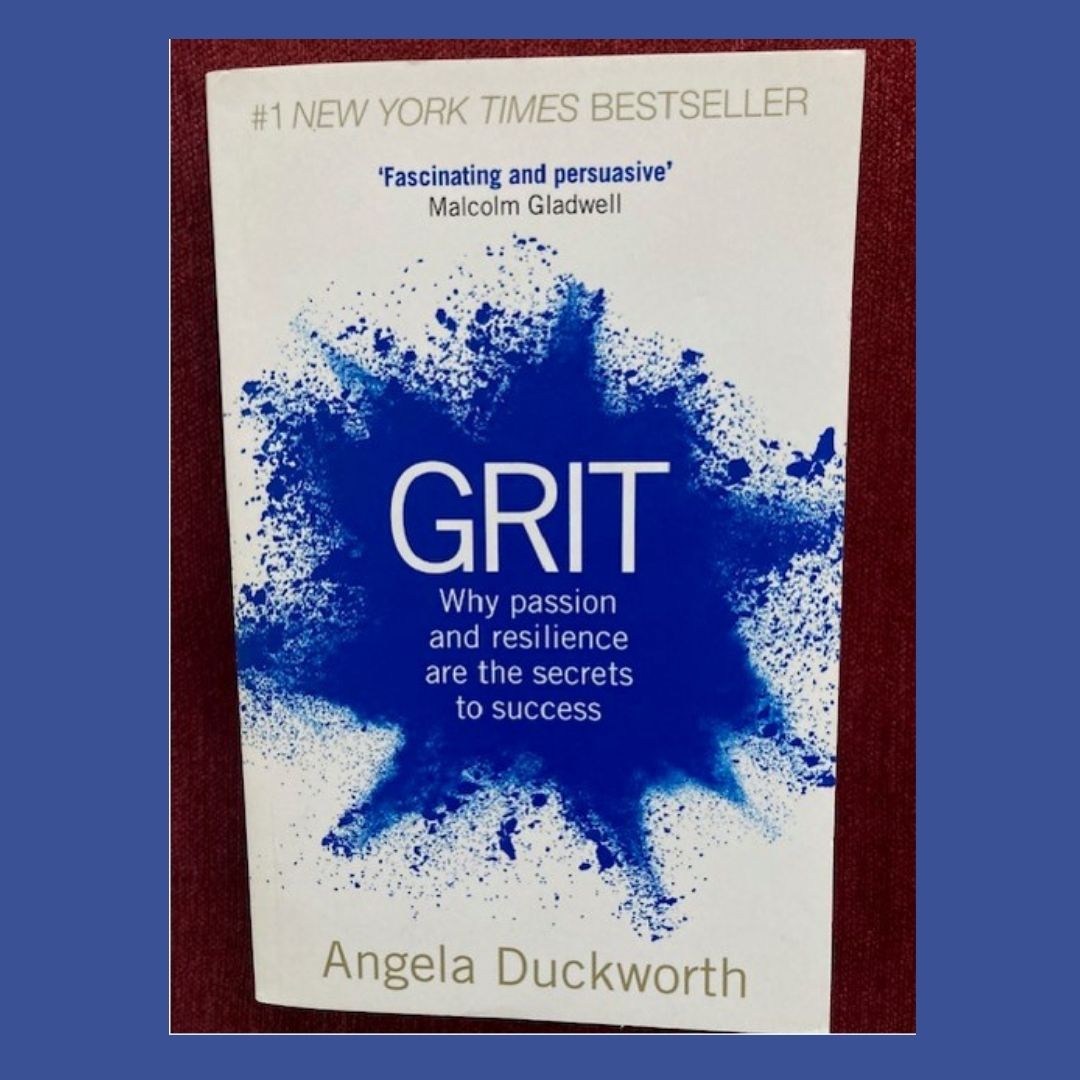
Angela Duckworth, author of “Grit” provides evidence that grit is a key component of many successes, with examples provided from the worlds of business, sport and education among others.
Grit is a combination of passion, perseverance and determination.
This book is full of examples and scientific evidence. Carol Dweck, author of “Mindset” is referenced and there is overlap in the messages both books convey.
Having a talent for something is not enough to become successful. Many of the stories told in the book demonstrate that success is attained by repeated practice. In line with Carol Dweck’s argument, we need to believe that we can become better by trying again. We must not give up when we encounter setbacks. In the long run, repeated effort will yield more reward than initial talent.
Specifically, Angela outlines 4 steps to grow our “grit from the inside out”.
1. Interest –Whilst passion isn’t enough by itself, it is a necessary element. Research shows that those with the highest levels of job satisfaction tend to work in roles which align with their interests. However, Angela goes on to explain that passion needs to be nurtured and is unlikely to strike us like a lightning bolt. Finding our interests should be an enjoyable process of discovery that can take time. Also, our interests and passions can change and we shouldn’t get hung up on finding our “one true calling”. She suggests thinking about the following questions to help identify our passion:
“What do I like to think about? Where does my mind wander? What do I really care about? What matters most to me? How do I enjoy spending my time?”
Or she suggests, it might be easier to start by thinking about “What do I find unbearable?”
2. Practice – we need to be willing to practice. The most effective practice entails a goal that stretches us, we need to give our full effort and we need feedback on our effort. After that, we reflect, refine and practice again.
3. Purpose – we need to pursue something that matters in the world. In this section, Angela provides some interesting examples of how people doing the same role might see it differently with some thinking they have a job, others see themselves in a career and others feel they have a calling to do what they do.
4. Hope – this is essential to help us recover from setbacks. Angela offers 3 tips to teach ourselves to have hope. She advises us to:
– Change limiting beliefs we might have about ourselves.
– Be more positive in how we talk about and to ourselves.
– Ask others for help.
Other parts of the book offer the chance to take Angela’s Grit questionnaire to check how “gritty” we are already. Also Angela offers advice on how to grow your grit from the outside in and as part of this offers insight into how a mentor or parent might support grittiness in children.
This book was not a fast read for me but it was worth the time investment. I recommend it to you.
 Sinead Huskisson