Belief Building December 2024

This time of the year is often associated with a review or look back at movies, music or books released during the year.

I like hearing and reading about what others have enjoyed, so this month I’ll share some of my highlights from 2024.

Perhaps a wrap-up is also timely, as I intend taking a break from writing this newsletter in 2025.  I have created 36 Belief Building newsletters over the last 3 years.  I hope you have enjoyed reading them as much as I have enjoyed putting them together.

Thanks to everyone who shared and recommended inspiring people, ideas, blogs, social media clips, newspaper articles, books or poems. Thanks for your feedback and thanks for reading.

Best wishes for 2025.
Sinead

According to Spotify Wrapped, the top 3 artists I listened to this year were Taylor Swift, Coldplay and Sia. I was a bit surprised by Sia but it seems she features on a lot of the songs that I like!

The 3 books that had the most influence on me in 2024 were:
Chris Hadfield “An Astronaut’s Guide to Life on Earth”
Marie Kondo “Spark Joy”
Oliver Burkeman “Meditations for Mortals”.

I enjoyed Chris’ book as it expanded my knowledge of space in a very easily digestible way. It was interesting to read about exercising in zero gravity and the other challenges faced by Chris and his team-mates.

Marie’s book has had a practical affect in terms of how I store my clothes.  Folding them and putting them away takes a little longer than usual but it is worth the effort.

Oliver’s book “Meditations for Mortals” has impacted me in terms of how I think about time and success.  If I had to sum up his message, I’d say; “Life is for living right now and we shouldn’t wait until we’ve cleared the decks of all the things we intend doing first so we can have the perfect run at what we think will be our perfect life. There is no perfection, what we have is just now, just this moment, in all its imperfection.”

I enjoy many different newsletters but I have picked these as my top 3: 
Oliver Burkeman The Imperfectionist
Page Grossman: do5ive
Padraig O’Morain Daily Bell 

Oliver’s newsletter is quite infrequent, perhaps one every 2 months or so but generally an interesting reflection on time and productivity. 

Page’s do5ive is usually sent fortnightly on Tuesdays and Page offers 5 different things to ponder, often on similar themes to Oliver’s newsletter or often related to the time of the year. She also usually includes The Other 5 which is a short and snappy list of what Page is reading or perhaps a link to a podcast or recipe.

Padraig’s Daily Bell email arrives in my inbox every day. It is usually just a paragraph long but always a nice reminder of mindfulness or taking a breath or pressing pause on unhelpful thinking.


I didn’t include movies or TV shows in the lists above as it is difficult to think of 3 that left a lasting impression on me in 2024. 

So whilst it’s not from 2024, I’m going to mention just one TV show, Ted Lasso. Given this newsletter is called Belief Building, I particularly enjoyed the message in the show, epitomised by the poster in the dressing room that said “Believe”.

I’m not giving anything away when I mention that there’s a part in Ted Lasso that includes Rick Astley’s song “Never Gonna Give You Up”.  But mentioning this allows me a segue into a side story regarding Rick Astley which is from a Financial Times article of 28 September 2024 written by Emma Jacobs “What Rick Astley can teach us about giving up”

The article begins with the line “Rick Astley is famous for two things. His 1987 hit, “Never Gonna Give You Up”. And giving up.” It goes onto elaborate that Rick feels lucky to have had the career trajectory that allowed him return to music 20 years after taking a break. The article ends with Rick’s words where he advises that he would recommend a year off rather than quitting completely.  I read the article in September around the time that I was thinking about taking a break from writing this newsletter. If I met Rick, I think I would say that I might take a year off or I might take less or I might take more.  But I will keep reading Oliver’s advice to live in the moment and enjoy what I have without trying to be perfect about anything.


I think perfectionism is based on the obsessive belief that if you run carefully enough, hitting each stepping stone just right, you won’t have to die. The truth is that you will die anyway and that alot of people who aren’t even looking at their feet are going to do a whole lot better than you and have a lot more fun while they’re doing it.” Anne Lamott

“It may not work out how you think it will or how you hope it does. But believe me, it will all work out.” Ted Lasso

Things don’t have to be perfect to be a success.” Chris McCausland, Comedian and Winner of Strictly Come Dancing 2024

Belief Building November 2024

Usually October is the month I write about time as the clocks change, but last month was dedicated to Autumn cleaning. So November is getting a turn on the time topic.

I attended a course in September where we were asked to choose 3 pictures from an array of pictures.  Almost everyone at my table chose the picture of the clock as it represented constant rushing and racing and not having enough time. 

I also chose the clock but I shared that I am really trying to change my relationship with time (it’s a big challenge!). I try to catch myself when I say I’m busy.  My re-frame is around being grateful for all the time I have and being grateful for all the opportunities I have to use my time in meaningful ways.

I have often mentioned the writer, Oliver Burkeman, in this newsletter. Oliver writes his own newsletter called “The Imperfectionist” and has written a number of books. His areas of interest include our relationship with time and what can be an obsession with productivity.

In his newsletter of 3rd October 2024, Oliver mentions the Unproductivity Challenge, which he describes as learning to stop after we have dedicated a fixed amount of time to something.  He draws upon research into the output of writers who confined themselves to writing for just 3 or 4 hours per day.

Oliver argues that our need to keep going to get something finished can reflect an insecurity in ourselves that we are somehow lacking if we haven’t reached the (unrealistic) pinnacle of having meet all our targets, done everything we said we’d do and marked everything off our to-do lists.

Most of us know reaching this pinnacle is highly unlikely but yet we keep trying; exhausting ourselves in the process.

Oliver suggests we try an alternative approach. We stop at a certain time or after a certain amount of work.

He says we’ll feel uncomfortable about it initially but gradually we’ll feel better and may in fact become more productive as a result of this change.

He poses the “Unproductivity Challenge” as follows: “find an hour or two next week when you expect to have time to yourself. Mark it in your calendar. When that moment comes, the rule is simple: you can’t do anything productive.”

It’s not just time off from work, it also means no household chores, doing grocery shopping etc. Oliver says he indulges his hobbies of reading for pleasure, hiking or playing the piano.  Oliver recommends this as a way to leave behind the insecure feelings that accompany not getting everything done and instead embrace this right to enjoy your existence, whatever your productivity levels.


Page Grossman, who I also like to quote from wrote about the same topic in her September newsletter.

Many of us tend to have a start time for our work but not a finish time as our finish time often relates to how much we think we need to get completed and we keep going trying to squeeze in one more task.

Page recommends setting a time to stop work.

That time shouldn’t be when she has finished something or when she has to stop because she’s rushing out to complete another obligation. It should be the time that she set in the morning that she is allowing herself to stop at because she has done enough work for that day. (Page is self employed so has more flexibility than some of us, however, I think the point is still relevant – we can all be guilty of just doing one more thing before logging off in the evenings.)

I’m going to add some wisdom from Padraig O Morain here because I think if we want to follow the approach set out by Oliver and Page then we should try to stay focused on work when we are working and not get too easily distracted.

Padraig shares this analogy “You are waiting for a train to a certain place. Trains from and to all destinations come and go. Would it make sense to get onto the first random train that comes along? Of course not. Following every mental distraction is like getting onto these random trains. It’s worth practising staying on the platform by giving attention to the present moment, even if it isn’t exciting.”


The fulllness of being alive isn’t something that’s coming later,once all the things are done. It’s something you can experience right here while you’re doing them.” Oliver Burkeman

I’d like to set a time boundary…And, instead of rushing through one more task, I want to pause and reflect on what I accomplished during the day.” Page Grossman

“When tempted to follow distractions (‘I’ll just check Instagram, no I’ll check the news, no I’ll check my email’) tell yourself, at least sometimes, to stay put.“ Padraig O’Morain

Belief Building August 2024

Whilst in Dublin recently, I visited the portal to New York. It was unveiled in May 2024 and after some early hiccups which caused it to close, it has re-opened.  There are now 4 global locations hosting portals, Lithuania, Poland, New York and Dublin, with more to come.

I found it fascinating. I was there around 1pm Dublin time (9am in New York) and there was a small crowd of people watching our New York counterparts busying on their way to work (many just waved as they hurried past). Then a guy on a bicycle pulled up and started doing dance moves.  Within a few minutes, he had the Dublin crowd copying his moves and we were all laughing and dancing.

Aside from the wonderful novelty of being taught dance moves from New York, it made me think about the power of movement.

I hope you enjoy this month’s newsletter!
Sinead

We have seen lots of movement at the recent Olympics. I was in awe of speed, flexibility, strength and talent every time I turned on the TV coverage. And there’s more to come as the Paralympics has got underway this week.

An athlete that caught attention on social media was Australian Rachael Gunn. Rachael, known as b-girl RayGun when competing, represented Australia at the Olympics inaugural break-dancing competition.

Rachael, aged 36 works as a lecturer at Macquarie University, Sydney. She scored zero points in her heats in Paris and was ridiculed for her unique style of break-dancing.

However, Rachael, who earned a PhD in 2017 researching cultural and gender based aspects of break-dancing, rose above the criticism to urge people to be different, creative and represent themselves.


I read an article recently where the actress Miranda Hart shared that she chooses to dance to one of her favourite songs when she is in a bad mood and that usually cheers her up.

She also says that when she is highly stressed, she tries to walk and move as slowly as possible and generally if she can succeed with that, she can calm herself down.

To mention an Olympian again, diver Jake Passmore uses another type of movement to help him focus and manage stress. He taught himself to juggle as a type of meditation before his competitions.

The benefits of movement are far reaching!


“Don’t be afraid to be different. Go out there and represent yourself, you never know where that’s gonna take you.” Rachael Gunn, Olympian

“You’re not getting up every morning thinking, ‘Olympic gold medal — I have to go and win that and if I don’t train hard, I won’t.’ You’d kind of, I dunno, lose your mind if you were thinking that every day. Mostly, what motivates us is just that we enjoy actually training every day — or more often than not, anyway, certainly.” Paul O’Donovan, Olympian

“Life is like riding a bicycle, to keep your balance, you must keep moving.” Albert Einstein

Belief Building July 2024

Whilst the Irish summer has not brought the weather we have been hoping for just yet, we have been spoilt with high profile sporting events.

Wimbledon’s tennis, the Euro’s soccer, Tour de France cycle race, and the Open golf tournament in Scotland have just recently come to a close.  

In Cork, the county is wearing red and white proudly and although our hurlers didn’t get to bring the Liam McCarthy cup home, the Cork camogie team continue to carry our hopes.

There is lots more sport in store as the Olympics has just begun in Paris.

Sport brings tremendous enjoyment and passion but what all these athletes have in common is belief.

As Henry Ford said, “Whether you think you can, or you think you can’t – you’re right.” 

A sport I didn’t mention yet is table tennis, read on for its relevance…

Zhiying Zeng played table tennis at an elite level in China throughout her teenage years. A change in rules introducing a bi-coloured table tennis bat, caused her to quit when she was 20 in 1986, as the new requirement didn’t suit her style of play. 

She thought her dream of competing in the Olympics was over.

She moved to Chile to work as a coach in 1989; set up a furniture business, married, had a family and made Chile her new home.

During the Covid19 lockdown, Zhiying, (or Tania as she is known in Chile), found her way back to table tennis.  With restrictions lifted, she started competing again and more significantly winning almost all the tournaments she entered.

Within a short time, she had gained a place on Chile’s national team.  Zhiying turned 58 this month and will be one of the oldest competitors at the Paris Olympics where she will represent Chile playing table tennis!


Remaining with the topic of table tennis, I want to mention the book “You Are Awesome” by Matthew Syed.  The book is aimed at children but in my opinion, everyone would benefit from reading it.

Matthew Syed, an accomplished author, represented Great Britain at the Olympics playing table tennis in 1992 and 2000.

His book, whilst based on how he became good at table tennis, is about mindset and belief.

He gives an easy to understand explanation of the concept of fixed versus growth mindset as expounded by Carol Dweck. 

A self described non-sporty person, Matthew adopted a growth mindset by believing he could improve his table tennis.

“A growth mindset is the belief that your ability is not fixed. You are not handed out a fixed pot of brilliance at birth. Instead you can grow and change your ability with practice, determination and effort.”

Matthew, now primarily an author rather than a table tennis player, goes on to explain how he breaks down his goals into separate elements and examines how he can make marginal gains in each area.  

It’s a useful book for anyone looking to inspire a friend or family member or offer self-encouragement, if in pursuit of a challenging goal.


“Some people say I have attitude – maybe I do… but I think you have to. You have to believe in yourself when no one else does – that makes you a winner right there.” Venus Williams

If we drop out when we hit problems, progress is scuppered, no matter how talented we are. If we interpret difficulties as indictments of who we are, rather than as pathways to progress, we will run a mile from failure. Grit, then, is strongly related to the Growth Mindset; it is about the way we conceptualise success and failure.” Matthew Syed

“I am the greatest. I said that before I even knew I was.” Muhammad Ali

Belief Building May 2024

May is a beautiful month of growth.

There are beech trees near where I live and they start the month as dry branches with brown, crepey, curled-up leaves. They end the month with soft, unfurled, green leaves, that are so lush and abundant, the branches are hidden.

Nature doesn’t resist change, but sometimes we do.

I know some students who are finishing college and others who are finishing secondary school this month.  Some are excited for the next chapter, some are nervous and would like to stay put.  Endings are difficult as we don’t always want to let go of where we are. 

As we get older, people find aging difficult, looking back wistfully at the vibrancy of their youth.

But every stage has something new for us and we would become stale if we never changed and moved forward.  Read on for more on this topic…

Have a good month!
Sinead

I recently finished Dr. Maureen Gaffney’s book, “Your One Wild and Precious Life: An inspiring guide to becoming your best self at any age.”  Each chapter describes a different stage of life, going from infancy to old age.

Some friends advised me to dive in and start reading from the stage that I was at myself but I read the whole book, cover to cover. I found it easy to read and it left me feeling uplifted about growing older. Every stage in life has its own purpose and we are always learning and developing. As Maureen outlines, we have 3 main drivers; 1. closeness, 2. competence and 3. autonomy and the importance of each one varies over our life stages.

I enjoyed the optimism in the book which showed it is possible to liberate yourself from past beliefs or limiting messages that you tell yourself and embrace every new day, regardless of your age.

In psychologist Maureen’s own words “At any stage, you are never fully formed. The story is never over. The story is always of a life in progress.”


If we are always holding onto the past, we don’t make space for the future.

A couple of months ago, I met a lady who had just published her first book of poetry.  She had let go of previous beliefs about her writing and took a risk.  Here’s one of her poems about a beech tree that let go of its past to become something new!
 

Dreamboat by Mary P. O’Sullivan

Miles away from the sea, it grew,
The beech tree in Greenhill.
From seed to sapling
Loving the sun
Loving the rain
Longing and reaching for the light.
Bowing and bending
Curving it’s lovely limbs
While a crookedness took hold.
Down to it’s very roots
where it’s dreams were audible
To nodding neighbours
For they were kind.
A dream, impossible dream maybe,
To maybe, just once,
Be launched, set free
Transformed into a different beauty.

So long years it waited
Until the appointed day
When a master carpenter stopped by
And two dreams fused
Still held within the heart
His artist’s eye recognised
Within the imagined flaw
The curving lines of his dreamboat
The perfect prow, the sturdy hull
A vision of genius and beauty
Launched upon the waves
Carrying it’s cargo of life’s memories
And proud achievements.
It’s precious store of stories
Of faith and love and trust
Of those who bravely took the boats
The ships to sail far away
In search of a new life
Silently holding the broken hearts
Of those still standing on the shore
Waving their tear drenched handkerchiefs,
Praying, believing in their safe homecoming
Once again reunited in laughing joy.


This realization that neither time nor choices are limitless is both daunting and exciting. This is the moment to take stock and figure out how to make the best of every precious moment of the rest of your life.” Maureen Gaffney

The difficulty lies not so much in developing new ideas as in escaping from old ones.” John Maynard Keynes

The Trees” Philip Larkin (if you would like another poem related to this month’s theme)

The trees are coming into leaf
Like something almost being said;
The recent buds relax and spread,
Their greenness is a kind of grief.

Is it that they are born again
And we grow old? No, they die too.
Their yearly trick of looking new
Is written down in rings of grain.

Yet still the unresting castles thresh
In fullgrown thickness every May.
Last year is dead, they seem to say,
Begin afresh, afresh, afresh.

Belief Building April 2024

For the last couple of months, this newsletter hasn’t had the time dedicated to it that I would have liked. I was busy and thought once I finish tasks x and y, I’ll have more opportunity to work on the newsletter.  In February and March, the newsletter writing was definitely a rush job.

Fittingly, the topic that I want to cover this month is the struggle between product and process. Or another way of putting it might be the push to achieve something (the output or product or newsletter) versus enjoying the journey of getting there (the process of doing and creating).

In my rush to tick the box of having a newsletter ready to send, I stopped enjoying the process of creating it. I even felt that my inspiration was drying up whereas previously there was always a light bulb moment or a serendipitous encounter or something that helped the newsletter writing to just flow.

What changed this month was I read a short article from author Simone Stolzoff – read on for more…

Simone Stolzoff is an American author.  His book “The Good Enough Job: Reclaiming Life from Work” will be released in the UK and Ireland next month. He also writes a newsletter, contributes to various publications, teaches an online course and speaks at conferences.

His book was released in the US about a year ago and Simo (rhymes with Nemo – as Simone introduces himself on his website) wrote an article about his disappointment in not making the New York Times Best Seller list.

He acknowledges himself the irony that his book is about separating self worth from work based achievements and yet he was invested in this ambitious goal.

Simo writes “The greatest risk of a goal-oriented life is that we remove ourselves from our present experience. If we are always striving to grab the next rung on the career ladder or to achieve the next life milestone, we can miss out on where we are today. Lasting fulfillment is the result of presence, not checking off boxes from some achievement rubric.”

He goes on to elaborate that process based goals (taking the daily actions and being in the moment rather than being obsessed about the outcome) are actually good for us, precisely because we never finish with them.  Also, we can’t control outcomes like making the New York Times Best Sellers list but we can control our daily mindset and actions.

Simo’s article concludes with this advice, “Process oriented goals keep the focus on what you can control. Write most days, eat whole foods, move your body -they’re great precisely because they are never “reachable”.”


In Page Grossman’s do5ive February newsletter, she mentions seeing a TikTok video about how unsatisfying doing laundry is. Just as you get to the end of the dirty washing basket, more dirty clothes go in.  She makes the point that we’ll never be satisfied if we focus on outcome oriented goals.

She offers the suggestion of replacing writing a to-do list that you might never get to the bottom of every day, with setting an intention of how you wish to feel throughout the day.  This might help us be less focused on “doing” and better able to embrace just “being”.

Reading this helped me switch my thinking. I moved away from the box ticking approach of must create a newsletter to being open for inspiration to strike. I set my mindset to be one of listening and absorbing whilst I tried to move away from the frantic running out of time thoughts.  Then I read Simo’s article and this newsletter clicked into place for me.  It has been more enjoyable to write than previous months and I hope you like it too. 


“I know plenty of people who have achieved incredible ambitious goals, only to keep pushing the goalposts further out. They spend their lives chasing carrots without ever feeling full.” Simone Stolzoff

We humans were not meant to produce constantly. We were also meant to rest, restore, take-in and absorb.” Page Grossman

“When you fall in love with the process rather than the product, you don’t have to wait to give yourself permission to be happy. You can be satisfied anytime your system is running” James Clear

Self-Fulfilling Prophesy

I am currently reading many essays about different financial crises and bank risks.

Whilst I’m learning a lot about technical, political and regulatory issues, it is interesting to note the impact that sentiment, belief and groupthink had in these historic events.

Many financial disasters started out as small isolated events confined to one institution or one country.  Contagion and fear quickly grew these events to be global catastrophes.

As I read, I’m reminded that if enough investors think the stock market will go down, the stock market goes down, more succinctly referred to as a “self-fulfilling prophesy”.

Of course, self-fulling prophesies don’t just exist in the markets, the lesson for ourselves is neatly summed up by Henry Ford, “Whether you think you can, or you think you can’t–you’re right.

Featured Image Credit: Nick Chong via unsplash.com

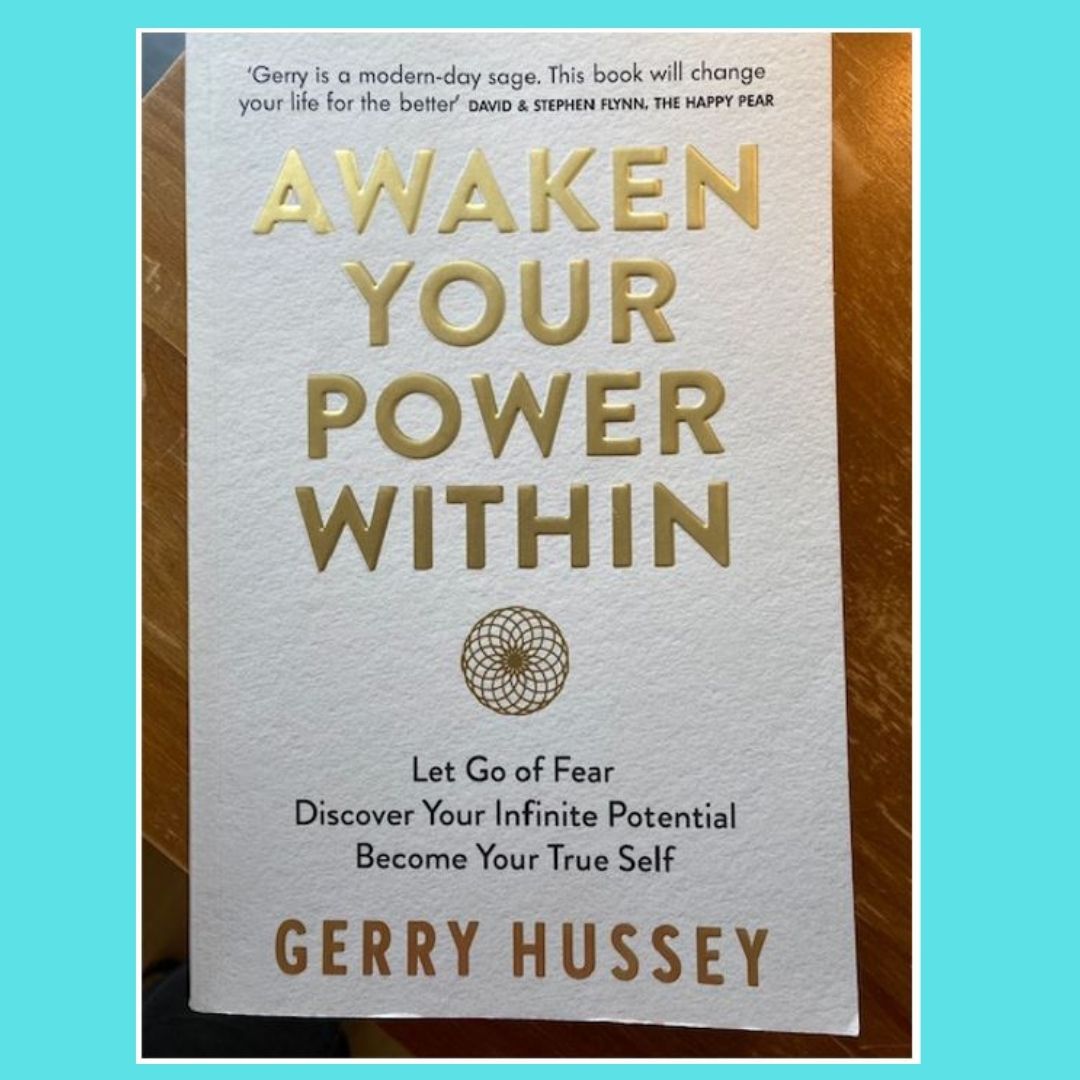
Awaken Your Power Within

Gerry Hussey’s “Awaken Your Power Within” covers many elements.  Gerry introduces us to aspects of science, elements about our own beliefs, exercises to encourage self-reflection and meditation, advice to help us find our potential as well as Gerry’s own personal story.

It has taken me 3 months to read this book.  I have never met Gerry but if he was open to a suggestion from me, it is that I think structuring the book as a 3 month course similar to, for example, “The Artist’s Way” by Julia Cameron might make it even more accessible and perhaps more actionable.  Maybe that suggestion is also to help me feel better about taking so long to read the book!

Overall, this is an excellent book packed with insight and advice, that’s why I had to progress slowly!

A key message that I took from the book was, whilst being connected via external relationships is essential as we are social beings, we must also be important to ourselves.  If we don’t prioritise our link with our authentic selves, we lose sight of who we really are and constantly seek external approval to fit in and please others.

One of my favourite exercises that Gerry offers is about how to construct and sustain positive thoughts.  He uses the analogy of crossing a 100m wide river using 10 pieces of timber, each 10m long.

He gives an example of someone who has an initial thought that they will start a business but relatively quickly this is followed up with doubt thoughts and so this person talks themselves out of their initial ambition.  Gerry suggests trying to create a sequence of 10 thoughts all of which sustain the initial idea, so that plank by plank, we cross the river. 

Sustaining 10 thoughts in a row is firing new beliefs in the brain and creating a pathway that cements our self-belief in our own ideas.  It’s a way to help us beat the fear thoughts that will always pop-up.  I liked this as its simple but I can see how it would be effective.  It’s challenging to get to 10 thoughts in a row without succumbing to negative beliefs.

I enjoyed this book and I’m grateful to Gerry for sharing his personal story as well as his expertise as a performance psychologist and coach.

I’ll finish with 3 of my favourite quotes from the book.

We can’t arrive at a new destination using the same old roads of the past.

Today is either one day or day one.”

We only die once, we get to live every single day.”

Happy New Year

At this time of year, we think about setting goals for next year.  I don’t usually set specific resolutions and instead choose a word that is my guide for the year.  I wrote a blog about this strategy last year.  You can read that here.

My word for 2021 was Creativity

I started the year doing some sewing but as the year progressed, I did more writing and some art related projects (including attempting to draw cartoons).  In the latter part of the year, I became a more creative cook (although still not a very good one)!

Another aspect, perhaps the most important, involved being more creative in my thinking.  Specifically, I tried to look at challenges differently, I tried to see alternative ways that I could approach my daily life and I sought inspiration from different sources.

I’m delighted with what I achieved.  From starting a regular blogging habit, to creating a website, to designing a newsletter, to tapping into different reading material and new contacts for advice and encouragement. 

Looking forward my word for 2022 is Belief

I intend nurturing my self-belief, encouraging others to rise above self-doubt to believe in themselves and above all, I will hold the belief that anything is possible.

This time last year, I didn’t think that in 12 months I would have a website and almost 50 subscribers to my newsletter, which is called “Belief Building”.  

But I have a website and with an additional 10 subscribers, I will hit my target number of subscribers for 2021. 

This is a link to a sample newsletter which is hosted on my website. Future newsletters will be delivered by email and  I intend to create one per month in 2022. Each will offer an inspirational story about someone who achieved something that may have seemed impossible, some advice on maintaining motivation and some quotes from encouraging people.

If you know anyone who would like to join me in Belief Building in 2022, please feel free to share this link to subscribe.

Happy New Belief Building!

Feature Image Credit: Wout Vanacker via Unsplash

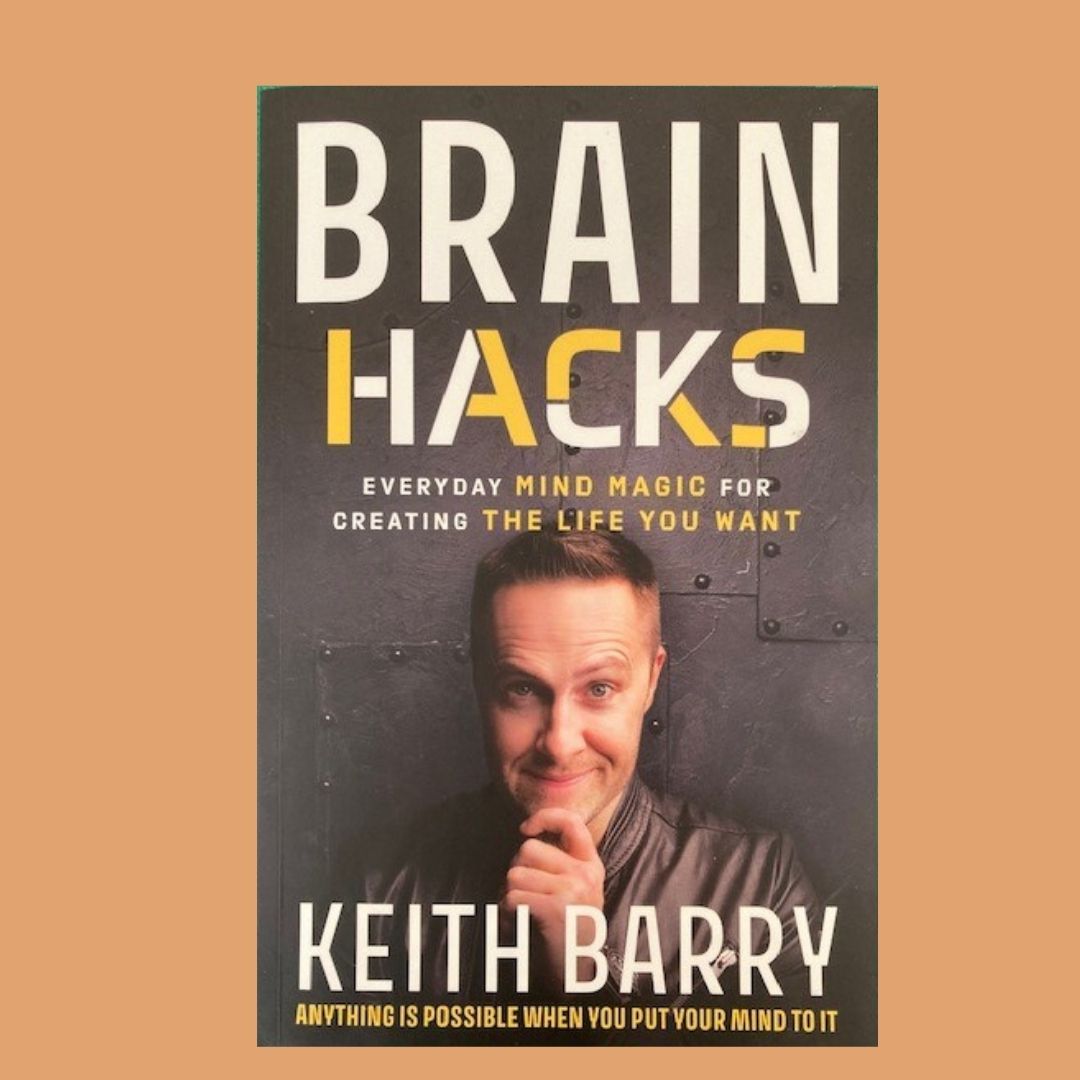
Brain Hacks

I was lucky enough to win a copy of Keith Barry’s bookBrain Hacks’ recently.  If I had paid for this book, I would have got good value as this book feels like 3 books in 1.

It is part autobiography, part positive thinking and part mental techniques.

I usually enjoy reading about mindset, habits and positivity and this book offers plenty on these topics. 

Keith shares his TARGETS strategy, (Take Aim, Act, Record your progress, Gamify, Expect Obstacles, Team Up, Success) and offers his personal experiences as examples.  In particular, I found his story about physiotherapy following a car accident a very compelling account of determination.

I liked his advice that everyone should take a reorientation day (or at least half a day) every month.  He explains it’s a day when he switches off his phone and retreats to a space where he thinks about his purposes, goals and progress.  He records his observations in his journal and uses this to plan and propel forward.

The power of the mind, and how Keith uses his own mind power is evident throughout the book.  Keith shares tools and techniques about using visualisation and reprogramming to change some of our automatic responses, which may not be serving us well.

As a lecturer, I always try to remember student names and Keith has given me some new memory hacks for this.  He suggests using repetition and visuals to recall a name.

Here are some of his examples.  A coincidence for me that my own name was one!

I see a key going through teeth… Keith.” 

“Sinead could be somebody with a plaster covering a deep cut on their shin – shinaid.” 

At the end of the book, Keith offers insight to some of his mental tricks, so the next time you meet me, I may be able to astound you with my mind power… of course I can’t divulge anything here due to “Rule 1. Never reveal the secret.”