Belief Building December 2024

This time of the year is often associated with a review or look back at movies, music or books released during the year.

I like hearing and reading about what others have enjoyed, so this month I’ll share some of my highlights from 2024.

Perhaps a wrap-up is also timely, as I intend taking a break from writing this newsletter in 2025.  I have created 36 Belief Building newsletters over the last 3 years.  I hope you have enjoyed reading them as much as I have enjoyed putting them together.

Thanks to everyone who shared and recommended inspiring people, ideas, blogs, social media clips, newspaper articles, books or poems. Thanks for your feedback and thanks for reading.

Best wishes for 2025.
Sinead

According to Spotify Wrapped, the top 3 artists I listened to this year were Taylor Swift, Coldplay and Sia. I was a bit surprised by Sia but it seems she features on a lot of the songs that I like!

The 3 books that had the most influence on me in 2024 were:
Chris Hadfield “An Astronaut’s Guide to Life on Earth”
Marie Kondo “Spark Joy”
Oliver Burkeman “Meditations for Mortals”.

I enjoyed Chris’ book as it expanded my knowledge of space in a very easily digestible way. It was interesting to read about exercising in zero gravity and the other challenges faced by Chris and his team-mates.

Marie’s book has had a practical affect in terms of how I store my clothes.  Folding them and putting them away takes a little longer than usual but it is worth the effort.

Oliver’s book “Meditations for Mortals” has impacted me in terms of how I think about time and success.  If I had to sum up his message, I’d say; “Life is for living right now and we shouldn’t wait until we’ve cleared the decks of all the things we intend doing first so we can have the perfect run at what we think will be our perfect life. There is no perfection, what we have is just now, just this moment, in all its imperfection.”

I enjoy many different newsletters but I have picked these as my top 3: 
Oliver Burkeman The Imperfectionist
Page Grossman: do5ive
Padraig O’Morain Daily Bell 

Oliver’s newsletter is quite infrequent, perhaps one every 2 months or so but generally an interesting reflection on time and productivity. 

Page’s do5ive is usually sent fortnightly on Tuesdays and Page offers 5 different things to ponder, often on similar themes to Oliver’s newsletter or often related to the time of the year. She also usually includes The Other 5 which is a short and snappy list of what Page is reading or perhaps a link to a podcast or recipe.

Padraig’s Daily Bell email arrives in my inbox every day. It is usually just a paragraph long but always a nice reminder of mindfulness or taking a breath or pressing pause on unhelpful thinking.


I didn’t include movies or TV shows in the lists above as it is difficult to think of 3 that left a lasting impression on me in 2024. 

So whilst it’s not from 2024, I’m going to mention just one TV show, Ted Lasso. Given this newsletter is called Belief Building, I particularly enjoyed the message in the show, epitomised by the poster in the dressing room that said “Believe”.

I’m not giving anything away when I mention that there’s a part in Ted Lasso that includes Rick Astley’s song “Never Gonna Give You Up”.  But mentioning this allows me a segue into a side story regarding Rick Astley which is from a Financial Times article of 28 September 2024 written by Emma Jacobs “What Rick Astley can teach us about giving up”

The article begins with the line “Rick Astley is famous for two things. His 1987 hit, “Never Gonna Give You Up”. And giving up.” It goes onto elaborate that Rick feels lucky to have had the career trajectory that allowed him return to music 20 years after taking a break. The article ends with Rick’s words where he advises that he would recommend a year off rather than quitting completely.  I read the article in September around the time that I was thinking about taking a break from writing this newsletter. If I met Rick, I think I would say that I might take a year off or I might take less or I might take more.  But I will keep reading Oliver’s advice to live in the moment and enjoy what I have without trying to be perfect about anything.


I think perfectionism is based on the obsessive belief that if you run carefully enough, hitting each stepping stone just right, you won’t have to die. The truth is that you will die anyway and that alot of people who aren’t even looking at their feet are going to do a whole lot better than you and have a lot more fun while they’re doing it.” Anne Lamott

“It may not work out how you think it will or how you hope it does. But believe me, it will all work out.” Ted Lasso

Things don’t have to be perfect to be a success.” Chris McCausland, Comedian and Winner of Strictly Come Dancing 2024

Belief Building November 2024

Usually October is the month I write about time as the clocks change, but last month was dedicated to Autumn cleaning. So November is getting a turn on the time topic.

I attended a course in September where we were asked to choose 3 pictures from an array of pictures.  Almost everyone at my table chose the picture of the clock as it represented constant rushing and racing and not having enough time. 

I also chose the clock but I shared that I am really trying to change my relationship with time (it’s a big challenge!). I try to catch myself when I say I’m busy.  My re-frame is around being grateful for all the time I have and being grateful for all the opportunities I have to use my time in meaningful ways.

I have often mentioned the writer, Oliver Burkeman, in this newsletter. Oliver writes his own newsletter called “The Imperfectionist” and has written a number of books. His areas of interest include our relationship with time and what can be an obsession with productivity.

In his newsletter of 3rd October 2024, Oliver mentions the Unproductivity Challenge, which he describes as learning to stop after we have dedicated a fixed amount of time to something.  He draws upon research into the output of writers who confined themselves to writing for just 3 or 4 hours per day.

Oliver argues that our need to keep going to get something finished can reflect an insecurity in ourselves that we are somehow lacking if we haven’t reached the (unrealistic) pinnacle of having meet all our targets, done everything we said we’d do and marked everything off our to-do lists.

Most of us know reaching this pinnacle is highly unlikely but yet we keep trying; exhausting ourselves in the process.

Oliver suggests we try an alternative approach. We stop at a certain time or after a certain amount of work.

He says we’ll feel uncomfortable about it initially but gradually we’ll feel better and may in fact become more productive as a result of this change.

He poses the “Unproductivity Challenge” as follows: “find an hour or two next week when you expect to have time to yourself. Mark it in your calendar. When that moment comes, the rule is simple: you can’t do anything productive.”

It’s not just time off from work, it also means no household chores, doing grocery shopping etc. Oliver says he indulges his hobbies of reading for pleasure, hiking or playing the piano.  Oliver recommends this as a way to leave behind the insecure feelings that accompany not getting everything done and instead embrace this right to enjoy your existence, whatever your productivity levels.


Page Grossman, who I also like to quote from wrote about the same topic in her September newsletter.

Many of us tend to have a start time for our work but not a finish time as our finish time often relates to how much we think we need to get completed and we keep going trying to squeeze in one more task.

Page recommends setting a time to stop work.

That time shouldn’t be when she has finished something or when she has to stop because she’s rushing out to complete another obligation. It should be the time that she set in the morning that she is allowing herself to stop at because she has done enough work for that day. (Page is self employed so has more flexibility than some of us, however, I think the point is still relevant – we can all be guilty of just doing one more thing before logging off in the evenings.)

I’m going to add some wisdom from Padraig O Morain here because I think if we want to follow the approach set out by Oliver and Page then we should try to stay focused on work when we are working and not get too easily distracted.

Padraig shares this analogy “You are waiting for a train to a certain place. Trains from and to all destinations come and go. Would it make sense to get onto the first random train that comes along? Of course not. Following every mental distraction is like getting onto these random trains. It’s worth practising staying on the platform by giving attention to the present moment, even if it isn’t exciting.”


The fulllness of being alive isn’t something that’s coming later,once all the things are done. It’s something you can experience right here while you’re doing them.” Oliver Burkeman

I’d like to set a time boundary…And, instead of rushing through one more task, I want to pause and reflect on what I accomplished during the day.” Page Grossman

“When tempted to follow distractions (‘I’ll just check Instagram, no I’ll check the news, no I’ll check my email’) tell yourself, at least sometimes, to stay put.“ Padraig O’Morain

Belief Building October 2024

I know it’s Autumn, but I want to mention Spring cleaning.

I have been reading Marie Kondo’s book “Spark Joy” and even if I didn’t take any action, I think I would be enjoying the book as it appeals to my inner organiser. But the added bonus is that it has prompted me to clear out old clothes and books. I’ve even delved into organising paperwork and admin!

Maybe this newsletter will spark some enthusiasm for Autumn cleaning!
Enjoy😊 
Sinead

Marie Kondo is best known as a Japanese tidying expert. She has trademarked her unique approach to decluttering, calling it the KonMari Method. Marie was influenced by her grandmother’s careful attention to her home and belongings as a child and always had a love of being organised and tidy. As a 19 year old University student in Tokyo, Marie started her tidying consultancy business.

Essentially Marie’s method focuses on keeping what you love, “sparks joy”, in Marie’s words. Marie has written numerous books, appeared in a Netflix documentary, been featured in many magazines and TV shows. She comes across as polite, modest and helpful.  Her “tidying-up” movement has millions of followers worldwide.

I have just read her book, “Spark Joy” and I felt joy just reading the book. It’s easy to read and Marie’s gentle encouragement did help me declutter clothes and books. Also, her words instill a sense of respect for our possessions, even things we don’t normally give much attention to, like socks!

“Your feet bear your weight and help you live your life, and it is your socks that cradle those feet.  The socks you wear at home are particularly important because thy are the contact point between you and your house, so choose ones that will make the time you spend there even more enjoyable.”

Marie offers caring advice on the best way to fold and store socks, proclaiming that “Balling your socks and stockings, or tying them into knots is cruel. Please put an end to this practice today.”


I loved Marie’s message about books.

“The energy of book titles and the words inside them are very powerful. In Japan, we say that ‘words make our reality’.  The words we see and with which we come into contact tend to bring about events of the same nature. In that sense you will become the person who matches the books you have kept. What kind of books would you want in your bookcase to reflect the kind of person you aspire to be?”

Marie advises looking along the spines of the books in your shelves to see what words jump out at you. She goes so far as to suggest that someone who is looking for a partner may be unconsciously thwarting themselves if many of the words staring out of them include “single” or have messages like “cooking for one”.

This overlaps with areas of positive psychology and thoughts related to the Law of Attraction and other ideas as proposed by books such as “The Secret” by Rhonda Byrne and “Manifest” by Roxie Nafousi. Given the recent popularity of concepts about the power of our thinking, I think Marie’s book advice is worth noting.


“The best way to find out what we really need, is to get rid of what we don’t.” Marie Kondo

Clutter obscures what’s most important. Discarding that which doesn’t support your ideal lifestyle creates space for treasured possessions to truly shine — and leaves room for future joy-sparking additions.” Marie Kondo

“If you’re not using the stuff in your home, get rid of it. You’re not going to start using it more by shoving it in a closet somewhere.” Joshua Becker

Belief Building August 2024

Whilst in Dublin recently, I visited the portal to New York. It was unveiled in May 2024 and after some early hiccups which caused it to close, it has re-opened.  There are now 4 global locations hosting portals, Lithuania, Poland, New York and Dublin, with more to come.

I found it fascinating. I was there around 1pm Dublin time (9am in New York) and there was a small crowd of people watching our New York counterparts busying on their way to work (many just waved as they hurried past). Then a guy on a bicycle pulled up and started doing dance moves.  Within a few minutes, he had the Dublin crowd copying his moves and we were all laughing and dancing.

Aside from the wonderful novelty of being taught dance moves from New York, it made me think about the power of movement.

I hope you enjoy this month’s newsletter!
Sinead

We have seen lots of movement at the recent Olympics. I was in awe of speed, flexibility, strength and talent every time I turned on the TV coverage. And there’s more to come as the Paralympics has got underway this week.

An athlete that caught attention on social media was Australian Rachael Gunn. Rachael, known as b-girl RayGun when competing, represented Australia at the Olympics inaugural break-dancing competition.

Rachael, aged 36 works as a lecturer at Macquarie University, Sydney. She scored zero points in her heats in Paris and was ridiculed for her unique style of break-dancing.

However, Rachael, who earned a PhD in 2017 researching cultural and gender based aspects of break-dancing, rose above the criticism to urge people to be different, creative and represent themselves.


I read an article recently where the actress Miranda Hart shared that she chooses to dance to one of her favourite songs when she is in a bad mood and that usually cheers her up.

She also says that when she is highly stressed, she tries to walk and move as slowly as possible and generally if she can succeed with that, she can calm herself down.

To mention an Olympian again, diver Jake Passmore uses another type of movement to help him focus and manage stress. He taught himself to juggle as a type of meditation before his competitions.

The benefits of movement are far reaching!


“Don’t be afraid to be different. Go out there and represent yourself, you never know where that’s gonna take you.” Rachael Gunn, Olympian

“You’re not getting up every morning thinking, ‘Olympic gold medal — I have to go and win that and if I don’t train hard, I won’t.’ You’d kind of, I dunno, lose your mind if you were thinking that every day. Mostly, what motivates us is just that we enjoy actually training every day — or more often than not, anyway, certainly.” Paul O’Donovan, Olympian

“Life is like riding a bicycle, to keep your balance, you must keep moving.” Albert Einstein

A Thing of Beauty

I think people admire butterflies more than they admire caterpillars. 

Are we guilty of only valuing the finished article? Only praising the successful outcome?  Only complimenting the final product?

What about appreciating the work in progress? 

Here’s a caterpillar that’s beautiful now.

Commencement Speech

Attending the conferring ceremonies at MTU last week was wonderful. It was great to see proud families and delighted students. 

Completing the week of celebration was a ceremony for the class of 2020.  I was part of this class and had watched my graduation in October 2020, on my laptop, sitting at home, wearing my slippers. 

On Saturday, I got my chance to wear cap, gown and shoes!

In America, these occasions are often marked by a commencement speech.  A speech which usually offers congratulations and guidance to graduates as they commence life after college.

Taylor Swift received an honorary doctorate from New York University this month and delivered the commencement speech there.

Taylor’s credentials as an accomplished writer are well established so I use some of her words below to sum up the gratitude, hard work and potential of graduation.

Taylor described the support networks that helped graduates get to the finish line as a “patchwork quilt of those who have loved us, those who have believed in our futures”.

She acknowledged the challenge of getting through studies during a global pandemic with humour, “Everyone in college during normal times stresses about test scores, but on top of that you also had to pass like a thousand COVID tests.”

As a lecturer, I see the peer pressure in under-graduate classes. It resonated with me when she spoke about pretending to not care in order to appear cool.  Showing ambition or enthusiasm for study is positive and shows a good example to others.  It’s a shame if there is pressure to hide this in order to fit in.

“It seems to me that there is a false stigma around eagerness in our culture of ‘unbothered ambivalence.’ This outlook perpetuates the idea that it’s not cool to ‘want it’.”

“Effortlessness is a myth. The people who wanted it the least were the ones I wanted to date and be friends with in high school. The people who want it most are the people I now hire to work for my company.” 

Getting a degree requires effort and hard work.  Congratulations to the classes of 2020 and 2021, enjoy the reward of your years of effort.  I look forward to keeping in touch and wish you well as you commence your next steps.  I leave you with wisdom from Dr. Taylor Swift.

“Just be yourself. There is no one better.”

Self-Fulfilling Prophesy

I am currently reading many essays about different financial crises and bank risks.

Whilst I’m learning a lot about technical, political and regulatory issues, it is interesting to note the impact that sentiment, belief and groupthink had in these historic events.

Many financial disasters started out as small isolated events confined to one institution or one country.  Contagion and fear quickly grew these events to be global catastrophes.

As I read, I’m reminded that if enough investors think the stock market will go down, the stock market goes down, more succinctly referred to as a “self-fulfilling prophesy”.

Of course, self-fulling prophesies don’t just exist in the markets, the lesson for ourselves is neatly summed up by Henry Ford, “Whether you think you can, or you think you can’t–you’re right.

Featured Image Credit: Nick Chong via unsplash.com

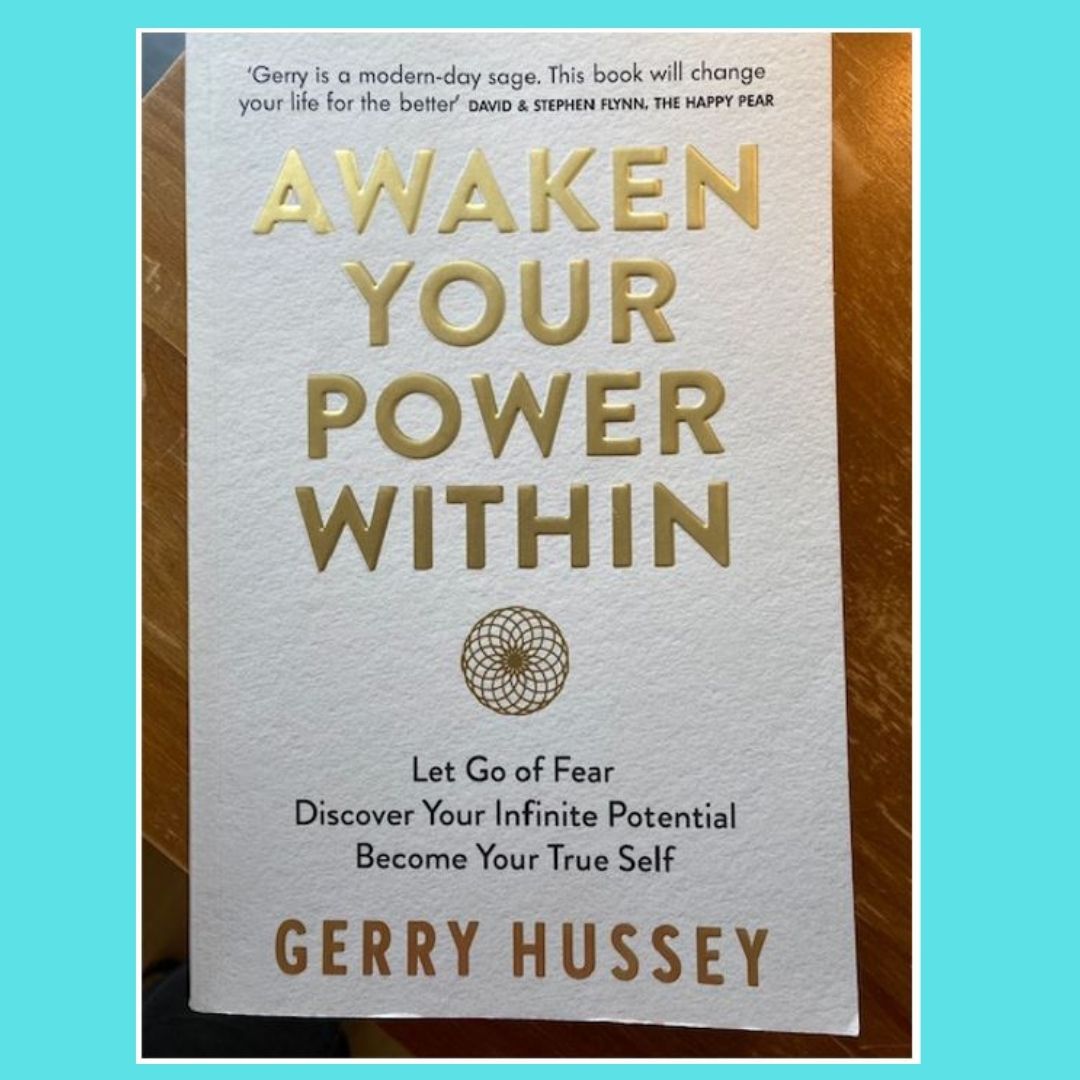
Awaken Your Power Within

Gerry Hussey’s “Awaken Your Power Within” covers many elements.  Gerry introduces us to aspects of science, elements about our own beliefs, exercises to encourage self-reflection and meditation, advice to help us find our potential as well as Gerry’s own personal story.

It has taken me 3 months to read this book.  I have never met Gerry but if he was open to a suggestion from me, it is that I think structuring the book as a 3 month course similar to, for example, “The Artist’s Way” by Julia Cameron might make it even more accessible and perhaps more actionable.  Maybe that suggestion is also to help me feel better about taking so long to read the book!

Overall, this is an excellent book packed with insight and advice, that’s why I had to progress slowly!

A key message that I took from the book was, whilst being connected via external relationships is essential as we are social beings, we must also be important to ourselves.  If we don’t prioritise our link with our authentic selves, we lose sight of who we really are and constantly seek external approval to fit in and please others.

One of my favourite exercises that Gerry offers is about how to construct and sustain positive thoughts.  He uses the analogy of crossing a 100m wide river using 10 pieces of timber, each 10m long.

He gives an example of someone who has an initial thought that they will start a business but relatively quickly this is followed up with doubt thoughts and so this person talks themselves out of their initial ambition.  Gerry suggests trying to create a sequence of 10 thoughts all of which sustain the initial idea, so that plank by plank, we cross the river. 

Sustaining 10 thoughts in a row is firing new beliefs in the brain and creating a pathway that cements our self-belief in our own ideas.  It’s a way to help us beat the fear thoughts that will always pop-up.  I liked this as its simple but I can see how it would be effective.  It’s challenging to get to 10 thoughts in a row without succumbing to negative beliefs.

I enjoyed this book and I’m grateful to Gerry for sharing his personal story as well as his expertise as a performance psychologist and coach.

I’ll finish with 3 of my favourite quotes from the book.

We can’t arrive at a new destination using the same old roads of the past.

Today is either one day or day one.”

We only die once, we get to live every single day.”

Good Enough

For 4 weeks, I have been back on campus delivering lectures and interacting with students in person.

One student I was speaking to told me he had a phobia of maths. It was a major obstacle for him in studying economics.  Whilst he enjoyed the theory aspects, he feared he wouldn’t be good enough to pass the course given the maths content.

To his credit, he told me he was seeking extra help and had allocated daily time to focus on the maths elements.

I spoke to another student 3 weeks ago about presenting a project in front of the class. She told me that she hadn’t done any in person presentations in 2 years.  She felt very nervous and wondered if she could create a recording instead. She didn’t believe she would be good enough if presenting live. 

I spoke to her again this week and she told me that she was trying to practice at home and intended recruiting some friends to be a warm audience whilst she built up her confidence.

It felt rewarding to be encouraging these students and I firmly believe the actions they are taking; being proactive and practicing, will result in improvement for them.

Yesterday, after work, I was talking to my sister and she remarked that I hadn’t posted many blogs lately.

I agreed. I told her I was busy and didn’t have enough time to produce anything that would be good enough to post.

When I heard my own words, I realised I needed to take inspiration from my students.

Taking action and practicing helps us all improve!

Feature Image Credit: Estúdio Bloom via Unsplash.com

One Red Paperclip

Belief, Courage, Action

One Red Paperclip is an interesting and entertaining read.  The author, Kyle MacDonald, a then 25 year old Canadian, decides he wants to trade a red paperclip for something bigger and better, ideally a house! 

Belief

The idea sparked from a childhood game called ‘bigger and better’, where he started with something small but tried to turn it into something ‘bigger and better’ by trading with friends and people in his neighbourhood.  When Kyle was 16, he had full belief in the potential of this game.  He recalled stories of a clothes peg becoming a fridge and he had heard a rumour that trades, that began with a toothpick, had culminated in a car.

Courage

Now in his mid 20s, Kyle had let his belief fade.  The red paperclip hung around in Kyle’s wallet for a few weeks before he got the courage to do something with it.  He procrastinated initially, feeling he needed to do more preparation before he could begin his plan.  His father asked him, “what would you do if you weren’t afraid?”  Finally, Kyle got the courage to take a photo of the red paperclip and upload it to Craigslist, (a classified ads website) with a message outlining his intention.

Action

To Kyle’s surprise, he got many responses.  Now he had to take action, he emailed people back to find out where they were located, as he wanted to make the trade in person.  For his first trade, he changed the red paperclip for a pen shaped like a fish. Around one year and fourteen trades later, Kyle had a … I won’t spoil the surprise in case you want to read the book.  If you are impatient to know more about the story, Kyle recorded a TedX talk in 2015.

He believed he could do something, had the courage to give it a go and started taking action. 

Who knew a red paperclip could be so inspiring?