Blog

The Fly

Have you ever watched a fly hammering itself against a glass window trying to get out?  I usually get a piece of paper and guide it towards the opening to set it free but of course the fly doesn’t always cooperate.  Sometimes I come back the next day and see a dead fly on the window sill.

At the start of the book, You2, Price Pritchett uses the analogy of a fly beating itself to death against a window as a way of explaining that sometimes doing the same thing over and over is a waste of energy and that perhaps we should look around and find a different way.

The fly is probably doomed because it is so small relative to the size of a window, it can’t really see the big picture that there could be another option.

I can relate to the fly’s thinking that there is only one route. For many years I wanted to write blogs but thought it was impossible.  I thought that to be a blogger, I needed a website.

However, unlike the fly, I have the benefit of greater perspective and a conversation with a friend led to the suggestion that I could post the blogs to LinkedIn.  It would be a simple way to test how interested I really was in blogging before incurring any cost that might arise from creating a website.

I started writing and posting to LinkedIn over a year ago.

Now, I have evolved. I’m more like a spider than a fly, as I have a WEB-site!

Feature Image credit: Chris Curry via Unsplash
Brain Hacks

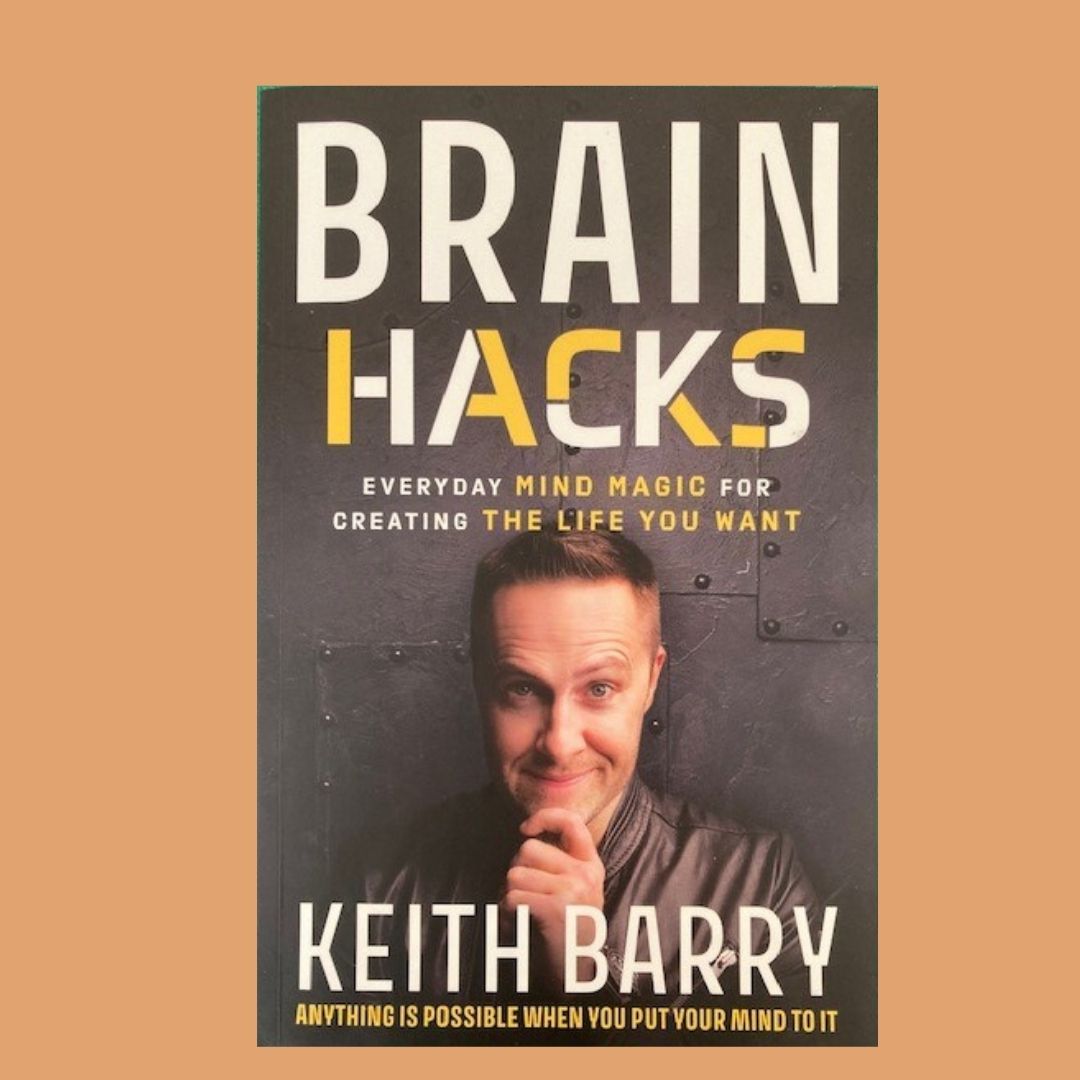
I was lucky enough to win a copy of Keith Barry’s bookBrain Hacks’ recently.  If I had paid for this book, I would have got good value as this book feels like 3 books in 1.

It is part autobiography, part positive thinking and part mental techniques.

I usually enjoy reading about mindset, habits and positivity and this book offers plenty on these topics. 

Keith shares his TARGETS strategy, (Take Aim, Act, Record your progress, Gamify, Expect Obstacles, Team Up, Success) and offers his personal experiences as examples.  In particular, I found his story about physiotherapy following a car accident a very compelling account of determination.

I liked his advice that everyone should take a reorientation day (or at least half a day) every month.  He explains it’s a day when he switches off his phone and retreats to a space where he thinks about his purposes, goals and progress.  He records his observations in his journal and uses this to plan and propel forward.

The power of the mind, and how Keith uses his own mind power is evident throughout the book.  Keith shares tools and techniques about using visualisation and reprogramming to change some of our automatic responses, which may not be serving us well.

As a lecturer, I always try to remember student names and Keith has given me some new memory hacks for this.  He suggests using repetition and visuals to recall a name.

Here are some of his examples.  A coincidence for me that my own name was one!

I see a key going through teeth… Keith.” 

“Sinead could be somebody with a plaster covering a deep cut on their shin – shinaid.” 

At the end of the book, Keith offers insight to some of his mental tricks, so the next time you meet me, I may be able to astound you with my mind power… of course I can’t divulge anything here due to “Rule 1. Never reveal the secret.”

Positive Affirmations

Whilst, I believe in using positive affirmations and trying to be optimistic and hopeful, I also know that I don’t always feel 100% positive.

I don’t want to be a fraud reciting a mantra of “I am happy” or “I am confident” when in fact I feel frustrated or annoyed.

Of course, saying “I am frustrated” or “I am annoyed” goes against the wisdom of positive affirmations.  So what should I do?

I received a useful piece of advice about this recently and it is simple.  Instead of saying “I am annoyed”, I can say “a part of me is annoyed”.

Therefore, I remain honest.  I am not denying my feelings but also I am not influencing my whole day with negative emotions.

Grit

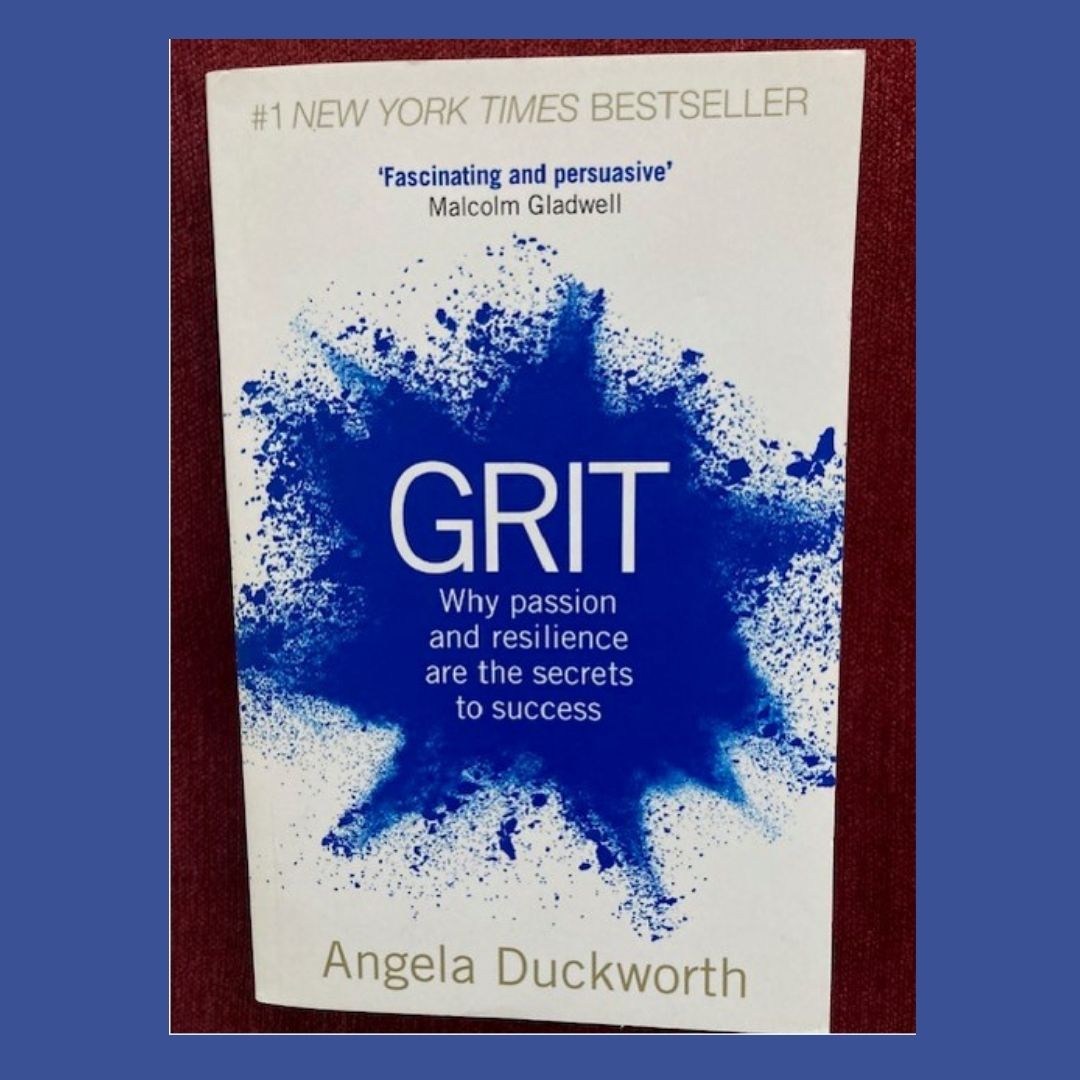
Angela Duckworth, author of “Grit” provides evidence that grit is a key component of many successes, with examples provided from the worlds of business, sport and education among others.

Grit is a combination of passion, perseverance and determination.

This book is full of examples and scientific evidence. Carol Dweck, author of “Mindset” is referenced and there is overlap in the messages both books convey.

Having a talent for something is not enough to become successful. Many of the stories told in the book demonstrate that success is attained by repeated practice. In line with Carol Dweck’s argument, we need to believe that we can become better by trying again. We must not give up when we encounter setbacks. In the long run, repeated effort will yield more reward than initial talent.

Specifically, Angela outlines 4 steps to grow our “grit from the inside out”.
1.      Interest –Whilst passion isn’t enough by itself, it is a necessary element.  Research shows that those with the highest levels of job satisfaction tend to work in roles which align with their interests. However, Angela goes on to explain that passion needs to be nurtured and is unlikely to strike us like a lightning bolt. Finding our interests should be an enjoyable process of discovery that can take time. Also, our interests and passions can change and we shouldn’t get hung up on finding our “one true calling”. She suggests thinking about the following questions to help identify our passion:
“What do I like to think about?  Where does my mind wander? What do I really care about? What matters most to me? How do I enjoy spending my time?”
Or she suggests, it might be easier to start by thinking about “What do I find unbearable?”

2.      Practice – we need to be willing to practice. The most effective practice entails a goal that stretches us, we need to give our full effort and we need feedback on our effort. After that, we reflect, refine and practice again.

3.      Purpose – we need to pursue something that matters in the world. In this section, Angela provides some interesting examples of how people doing the same role might see it differently with some thinking they have a job, others see themselves in a career and others feel they have a calling to do what they do.

4.      Hope – this is essential to help us recover from setbacks. Angela offers 3 tips to teach ourselves to have hope. She advises us to:
– Change limiting beliefs we might have about ourselves. 
– Be more positive in how we talk about and to ourselves.
– Ask others for help.

Other parts of the book offer the chance to take Angela’s Grit questionnaire to check how “gritty” we are already. Also Angela offers advice on how to grow your grit from the outside in and as part of this offers insight into how a mentor or parent might support grittiness in children.

This book was not a fast read for me but it was worth the time investment. I recommend it to you.

Time

I like this time of year. I like the changing colours on the trees. I like wearing warm, cosy clothes. And I really like gaining an extra hour when the clocks change!

Almost everyone I know is pressed for time, always rushing and often running late. Getting an extra hour is a gift!

Previously, I have been quite a time obsessed type of person, feeling stressed when I encounter a delay. 

Recently, I added a reminder to my phone that pops up twice a day.  It says: “I have all the time I need for everything”. It’s an affirmation that is helping me to have perspective about time and deadlines.

In addition, I’m trying out some other strategies to help with having more time.

1.      Before I go to bed in the evening, I make decisions for the next day, choices like what clothes I’ll wear.  Doing this the night before means I’m quite purposeful as I am looking forward to going to sleep, and I don’t delay. This then leads to a more streamlined morning, as I get straight into my day’s priorities.

2.      I have started to reduce the time I spend making minor decisions. For example, when someone mentions a good film or TV show, I put a note in my phone, and follow that recommendation as opposed to losing time weighing up different options.  Various studies have shown that people spend an average of 20 minutes or more choosing what to watch on TV.

3.      I am trying to set time limits for unimportant tasks like scrolling through social media. An academic I know allows herself 10 minutes of scrolling through Twitter after 50 minutes of concentrated work. In his book, “Atomic Habits”, James Clear shares that he gets his assistant to change his social media passwords on Monday morning so he can’t access his accounts until he gets the new passwords sent to him at the weekend. I haven’t gone quite that far but it’s an idea worth considering.

What would you add to the list?

Feature Image credit: Malvestida Magazine via Unsplash

High 5

Mel Robbins, now a best selling author, entrepreneur and coach, was once someone who struggled to get out of bed in the morning. She kept pressing snooze on the alarm clock to avoid being confronted by her daily struggles and unhappy life.

One afternoon she was inspired by a TV advertisement, which showed a rocket blasting off after a 5 second countdown.

This motivated her and the next day she replaced pressing snooze on the alarm clock with counting down in her head “5,4,3,2,1, blast-off” and got out of bed. This marked the beginning of a new approach for Mel.

She started using the 5 second rule and turned her life around. When she had a good idea or impulse, rather than talk herself out of it, she undertook an action within 5 seconds.

Although it seems very simplistic, the approach has a scientific basis. The strategy wards off procrastination and diverts our brains away from over-thinking and self doubt, thus leading to action and greater productivity. 

I read Mel’s book “The 5 Second Rule” a few years ago and still sometimes use the countdown in my head, especially when I need to do things I don’t feel like doing.

This year, Mel has brought out a new book “The High 5 Habit”. Its premise also seems very simple. Mel encourages us to give ourselves a high 5 in the mirror every morning. 

We support ourselves in this action, as opposed to being reliant on external validation. The research says that by taking a moment to reflect on and celebrate being ourselves, we increase motivation and productivity.

I haven’t read the book yet but I am going to add a self high 5 to my day, it’s a simple habit to incorporate especially if it increases motivation and performance and I don’t think Mel would want me to procrastinate!

Feature Image Credit: Bill Jelen via Unsplash

Diverse Teams

I have been reading “Rebel Ideas” by Matthew Syed. I agree with the main theme of the book – diverse teams are likely to be more successful as there is the benefit of different ideas, insights and perspectives.

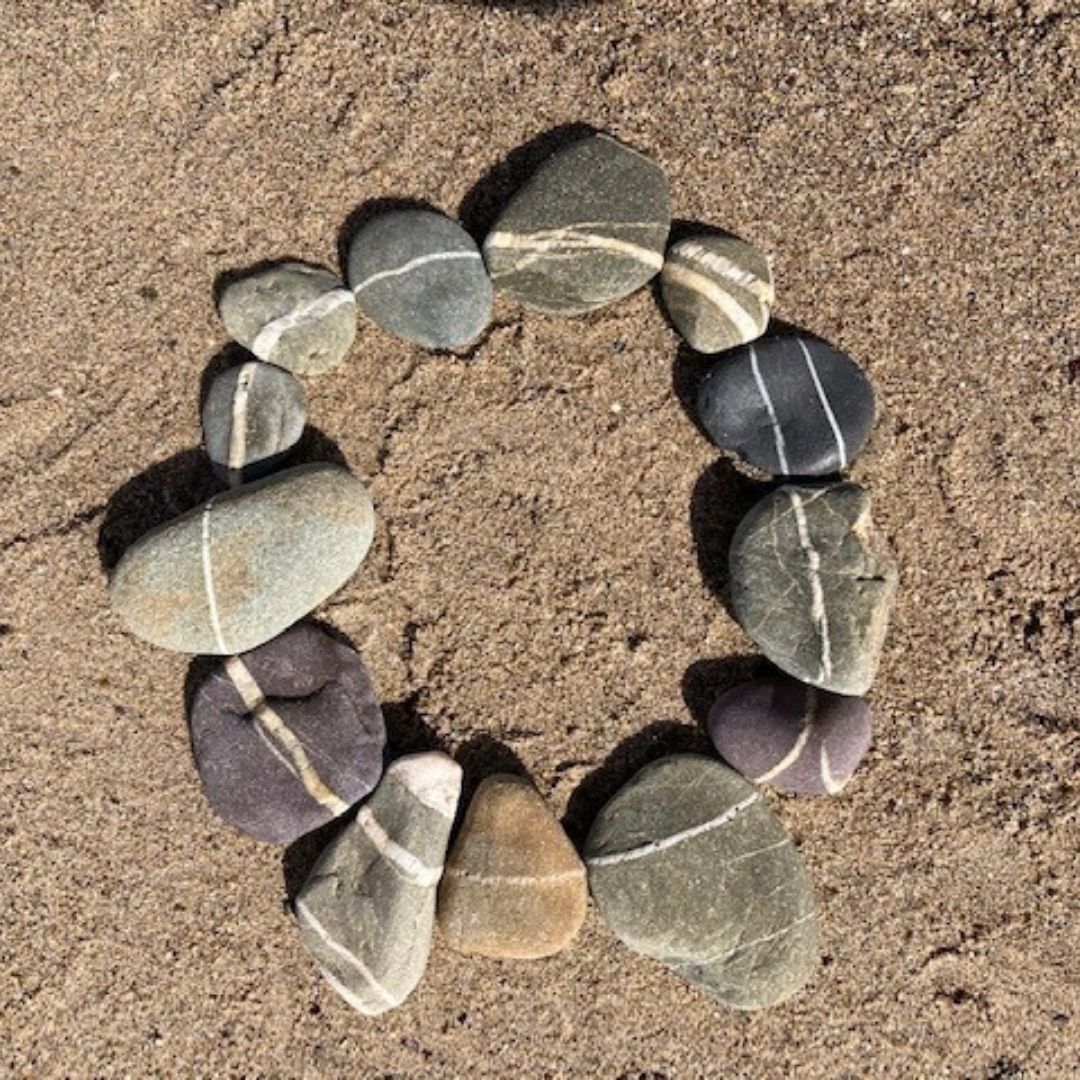
I like this photo of stones on a beach.  All the parts are different shapes, sizes and colours but put together, we can see a white seam that runs through them to make a circle.

I think this can be a good way to think about teams. The participants can be very different, yet by working together they produce valuable, beneficial, creative output.

Stirred not Shaken

James Bond prefers his martinis shaken not stirred. 

In the context of a drink, shaken ensures it is fully mixed and the result might be frothy from the introduction of air in the shaking process. 

Stirring is preferable when the ice shouldn’t get too crushed and the ingredients are mixed more gently.

Some argue that Bond is making a mistake by having his martini shaken not stirred, as the ingredients of a martini would offer a better taste experience if stirred. 

Typically, drinks that are shaken have thicker ingredients like syrup or cream. A martini does not usually have those thicker liquids.

Perhaps it fits with Bond’s character that he would choose shaken over stirred. Shaken has connotations of force and fear, which are all part of the job for Bond.

I think I prefer stirred not shaken in most aspects of life.

Stirred is a more gentle and gradual process and also has the meaning of arousing emotion. 

If I were studying for an exam, rather than force the information into my brain in a rapid shake up, I would prefer a deliberate processing of significant facts so that I might retain them for longer.

If I were preparing for a sporting event, rather than leaving myself shook after a once-off intense and fierce workout, I would prefer to gradually and slowly train until I was ready for the event.

If I were selling a product or service, rather than leave people shaken by bombarding them with a sales pitch, I would prefer to gradually stir them to win them over or encourage them to action. 

What would you choose? 

Feature image credit: Ambitious Creative Co. Rick Barrett via Unsplash

Fresh Start

Today is a fresh start!

Every day is a fresh start. Every minute is a fresh start.

For 10 weeks in a row, I have posted a blog to LinkedIn at the weekend. However, I didn’t do that this weekend.

I had a busy week and the right idea for a blog never came to me.

This morning (Monday), I was disappointed that I’d broken my streak.

Out walking, I saw a group of swans – I counted 10 and thought 10 is a good number and it looks a lot (I had to take 2 photos to capture all the swans), so I should be happy with how far I’ve got with the blogs.

And then I had the inspiration – its never too late! 

Just as easily as another swan might come along, I could write a blog today – there’s no rule saying I can only post blogs at the weekend.


Sometimes we impose rules on ourselves that aren’t there at all. Sometimes we think because we’ve been doing something for weeks, months or years, we must keep doing it but that’s not the case.

We can always have a fresh start.

Bravery v Courage

I would not describe myself as brave but there are times when I have found the courage to do something that scares me.

This prompted me to wonder if there is a difference between bravery and courage.

From what I learnt I think being brave means rising to a challenge fearlessly, whereas showing courage means rising to a challenge in the presence of fear.

Bravery is generally an innate character trait whereas courage is something we choose to exercise. 

Maybe it is worth considering that people whose bravery we have admired were not brave at all but instead they were adept at being courageous.

Here’s 3 ideas on how we might become more courageous:

1.      Start small – Courage doesn’t mean acting recklessly, do your research, prepare, take calculated risks. If you try something and it doesn’t work out, don’t see it as failure, see it as feedback and try again using a different approach.

2.      Find a partner in practicing being courageous – Whether it is going to the gym or studying or doing a project at work, having someone else to support us and hold us accountable definitely makes it more likely that we’ll persevere. 

3.      Shrink the fears – Instead of imagining the worst thing that might happen, why not imagine the best possible outcome? Courage has less to overcome if we can make the fear smaller.

What would you add to the list?

Feature Image Credit: Eric Combeau via Unsplash