As we have hit summer holiday season in Ireland, this month’s theme is about slowing down and questioning our need to be always productive.
Given the current heatwave in Europe, being very active is not advised anyway, so please enjoy this 5 minutes of gentle reading!
Ice cream is optional 🍦
Sinead
I was hoping to find an example of an inspirational person who might be known for doing less rather than more but I found that challenging.
I did discover that the basketball player LeBron James is an advocate for meditation. As I was mulling over if he would be the person to focus on this month, I was standing in a queue and noticed the girl in front of me was wearing a LA Lakers jacket so I took that as a sign!
LeBron James was born on 30th Dec 1984. He’s a professional basketball player who plays in the NBA for the Los Angeles Lakers. He is 6ft 8inches tall. He is left handed but often takes his shot on basket with his right hand.
He had a challenging upbringing. His mother was just 16 when she had LeBron and his father who had a criminal record was not in his life. At the age of 9, LeBron went to live with a local football coach as his mother thought he would have a more stable upbringing living with a family. The coach was the first to notice LeBron’s sporting talent. In addition to his athleticism, it is reported that LeBron had an ability to cope with pressure from a young age and seemed to have a natural calmness.
The LA Lakers have been using meditation as part of their training and development for about 20 years and LeBron is a convert. In 2019, he partnered with the Calm App to promote meditation. He is known to work on his mental fitness as well as his physical fitness. Earlier this year, he was recorded on camera with his eyes shut whilst on the bench during the closing minutes of a game.
LeBron is heading into his 5th season at the LA Lakers and his 20th season in the NBA and despite previous injuries, he was quoted recently as saying he feels “100% healthy”.
Off the basketball court, LeBron gives his time and resources to help others. The LeBron James Family Foundation was set up in 2004 to help disadvantaged children in LeBron’s home town of Akron, Ohio. It has since expanded its reach, connecting with others who are working to revitalise neglected communities throughout America.
Oliver Burkeman is the author of “Four thousand weeks: Time Management for Mortals”. The four thousand weeks referred to in the title relate to the average life-span we might have if we live to our late 70s.
Oliver’s main point is about the preciousness of our time on this planet. He draws attention to the futility of constantly chasing productivity. Having tried many productivity hacks, he has reached the conclusion that a state of perfect productiveness is a myth.
I didn’t read this book but instead listened as Oliver was interviewed by Dan Harris on the Ten Percent Happier podcast (published 1 June 2022), whilst I was multi-tasking (trying to be productive) doing housework!
This is ironic because the theme of the book is about letting go of trying to be ultra-productive. Oliver advises that the constant pursuit of getting everything and more done does not lead to happiness. He argues that we might feel more peaceful if we just accept we are not going to do everything and it’s ok to let some things go.
There’s lots of useful advice in the podcast which I am sure is also present in the book. I think I would enjoy reading it, however based on Oliver’s advice maybe that is one book I might let go given that I got a great insight by listening to the podcast.
As we are in the month of July, the part that struck me the most was Oliver’s comments on rest and having down-time. He highlighted how regularly we measure everything.
Even our hobbies have targets, self-improvement goals or side-hustle aspirations. The message I took away was it is ok to have a break and do something frivolous. Maybe a good time to do that is now, when most of the world is in holiday mode.
So this month’s motivation section is about letting go of constant doing and instead enjoying some just being!
“There is a lot of pressure put on me, but I don’t put a lot of pressure on myself. I feel if I play my game, it will take care of itself.” LeBron James
“Without noticing we’re doing it, we treat the future as intrinsically more valuable than the present. And yet the future never seems to arrive.” Oliver Burkeman
“Don’t underestimate the value of doing nothing, of just going along, listening to all the things you can’t hear, and not bothering.” Winnie the Pooh
Thanks for all the support with getting to 100 newsletter subscribers before my birthday – I have actually got to 115.
Welcome to all new subscribers.
When I created the target, I set myself the challenge of mentioning my website and newsletter to 1 new person everyday.
I’m grateful to my colleagues who were very helpful in assisting me get to the target.
This month’s theme is about taking action. The growth of my subscriber list is an example of how a small daily action can pay off. I just needed to be brave and make a start!
Also, hopefully you’ll notice the extra wisdom this month, now that I’ve completed 5 decades on the planet! 😉
Happy June!
Sinead
PS If you know someone else who might like to subscribe, here’s the link
Oprah Winfrey was born on 29th January 1954 in Mississippi, USA. She had a poor upbringing and moved between Wisconsin and Tennessee alternating between living with her maternal grandmother, her mother and her father throughout her youth.
50 years ago, she won the Miss Black Tennessee beauty pageant. Following this, she got an opportunity with a local radio station. From childhood, Oprah had been a gifted speaker and these skills won her a scholarship to college where she studied communication. She left college before getting her degree as she got a job in TV in 1975. However, she returned and submitted her final assignment 10 years later to graduate in 1987.
The Oprah Winfrey show was first broadcast in 1986. After 25 years, it came to an end but at that stage it was broadcast in over 100 countries worldwide and had a weekly audience close to 50million people. Its popularity and longevity led to Oprah becoming one of the most influential women in the world.
Oprah takes so much action and has so many endeavours that this newsletter would be a lot longer than a 5 minute read if I were to list them all. She is accomplished at acting, writing, publishing and broadcasting. In addition to this, she is a very generous philanthropist, supporting many causes worldwide.
In 2013, President Obama awarded her the Presidential Medal of Freedom which is the highest honour that can be awarded to a civilian in the US.
Such is her influence, many publications talk about an “Oprah effect” if she endorses a product or service or recommends a book for her book club.
Impressive person!
‘Just do it’ is a phrase synonymous with the sportswear brand Nike. It was first used in 1988 and the accompanying advert showed an 80 year old man running across the Golden Gate Bridge.
Walt Stack was something of a legend in San Francisco’s athletic community as he partook in many different types of exercise and was running 17 miles a day in his 80s as well as swimming a mile in cold water and cycling 6 miles. One of his famous pieces of advice for those in his running club was “start slow and taper off”.
Initially, I thought it ironic that Nike had chosen Walt for their advert as I felt their “Just Do It” message was about speed and urgency and then Walt had a more slow and steady approach. However, the more I think about it, I realise the message is actually about getting started. It doesn’t matter whether you will be going fast or slow, the key thing is to start, to take action.
We can have all the plans in the world but they are really just day dreams if we don’t start taking action.
Here’s 5 thoughts about taking action.
Stop waiting for everything to be perfect. We’ll never start if we are waiting for perfect conditions because life always has curve balls in store for us.
We should be specific about when we are taking the action – perhaps set an alarm. Help ourselves by choosing a time that fits well with our routine.
Use a visual cue to reward ourselves. In his book, “Atomic Habits”, James Clear tells a story about a stock broker who rose to success. His initial strategy included adding a paper clip to a jar every time he made a sales call.
You don’t have to know all the actions that are required to get to your goal, you just need to take the next action. I really like these lyrics from “The Next Right Thing”, which is a song from the movie Frozen 2. “Just do the next right thing, Take a step, step again, It is all that I can to do, The next right thing, I won’t look too far ahead, It’s too much for me to take, But break it down to this next breath, this next step, This next choice is one that I can make”
Action begets more action. My simplistic interpretation of Newton’s laws of motion is a body at rest stays at rest but a body in motion remains in motion unless acted upon by an external force. So taking the first action builds momentum and keeps us going.
As Nike might say… Just do it
“You just have to keep on doing what you do…Keep going. Start by starting.” Meryl Streep
“Small deeds done are better than great deeds planned.” Peter Marshall
“You don’t have to be great to start, but you have to start to be great.” Zig Ziglar
“The big secret in life is that there is no big secret. Whatever your goal, you can get there if you’re willing to work.” Oprah Winfrey
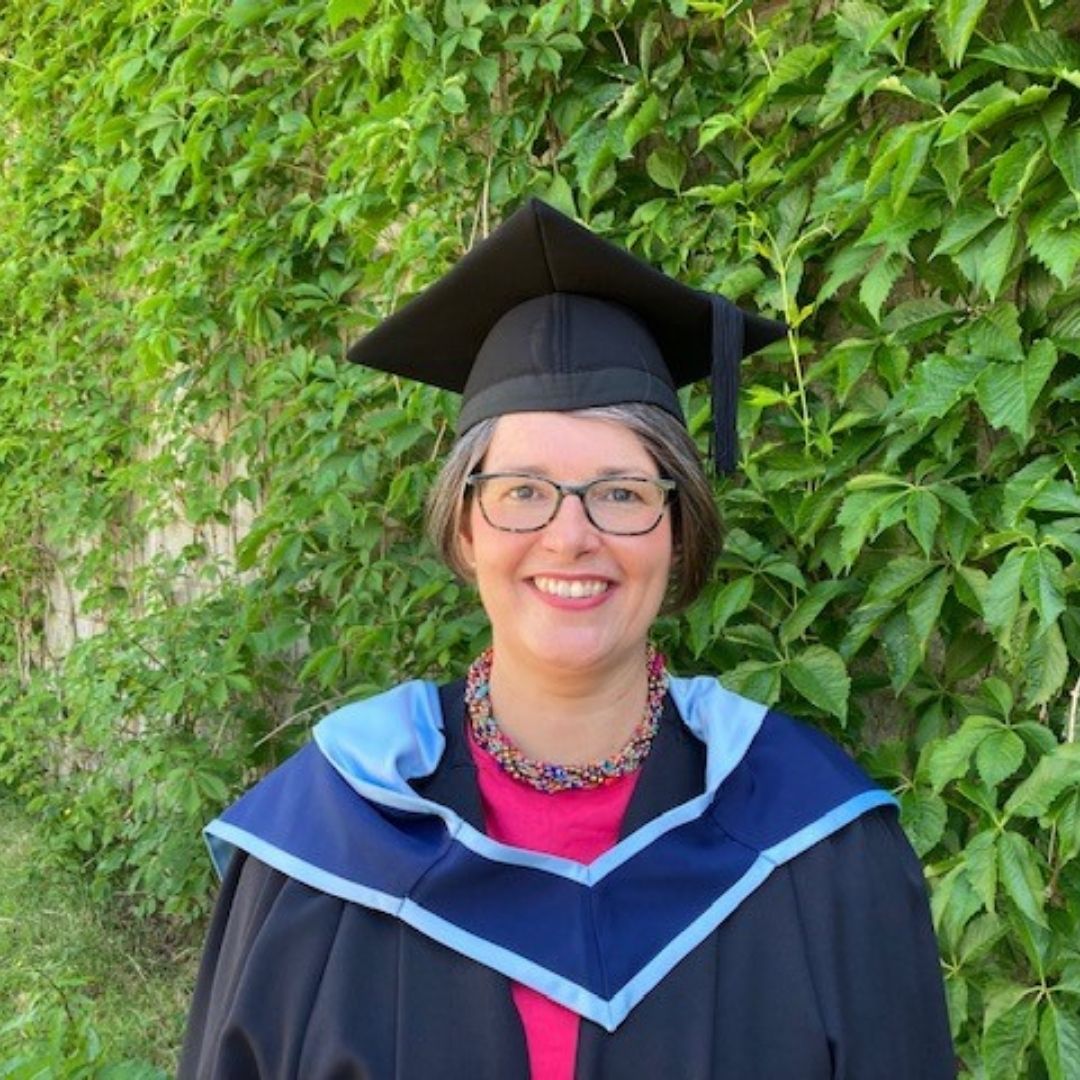
Attending the conferring ceremonies at MTU last week was wonderful. It was great to see proud families and delighted students.
Completing the week of celebration was a ceremony for the class of 2020. I was part of this class and had watched my graduation in October 2020, on my laptop, sitting at home, wearing my slippers.
On Saturday, I got my chance to wear cap, gown and shoes!
In America, these occasions are often marked by a commencement speech. A speech which usually offers congratulations and guidance to graduates as they commence life after college.
Taylor Swift received an honorary doctorate from New York University this month and delivered the commencement speech there.
Taylor’s credentials as an accomplished writer are well established so I use some of her words below to sum up the gratitude, hard work and potential of graduation.
Taylor described the support networks that helped graduates get to the finish line as a “patchwork quilt of those who have loved us, those who have believed in our futures”.
She acknowledged the challenge of getting through studies during a global pandemic with humour, “Everyone in college during normal times stresses about test scores, but on top of that you also had to pass like a thousand COVID tests.”
As a lecturer, I see the peer pressure in under-graduate classes. It resonated with me when she spoke about pretending to not care in order to appear cool. Showing ambition or enthusiasm for study is positive and shows a good example to others. It’s a shame if there is pressure to hide this in order to fit in.
“It seems to me that there is a false stigma around eagerness in our culture of ‘unbothered ambivalence.’ This outlook perpetuates the idea that it’s not cool to ‘want it’.”
“Effortlessness is a myth. The people who wanted it the least were the ones I wanted to date and be friends with in high school. The people who want it most are the people I now hire to work for my company.”
Getting a degree requires effort and hard work. Congratulations to the classes of 2020 and 2021, enjoy the reward of your years of effort. I look forward to keeping in touch and wish you well as you commence your next steps. I leave you with wisdom from Dr. Taylor Swift.
For me, May has a fresh start feeling. The evenings are brighter for longer and the temperature is getting warmer. Trees that were bare for many months are suddenly verdant with leaves. Bees and butterflies are busy in gardens.
It’s a welcome sense of renewal and I’m grateful for the hope it brings.
This month’s newsletter is about having hope and the ability to decide to bounce-back from negative circumstances.
At any time, we get to choose our response to a situation and we can decide to be optimistic and positive or we can stay stuck in negative thought.
It can be very hard to shake off “poor me” feelings. Nature gives us a helping hand at this time of year by showing us its possible to renew and grow again. I hope you enjoy this newsletter!
Sinead
Viktor Frankl was born in March 1905 to a Jewish family living in Austria. As a child he was interested in psychotherapy. At university, he focused on studying depression and his advances and theories resulted in decreased suicide rates.
In 1942, Viktor and his family were arrested and put in a concentration camp. Within a short period of time, Viktor and his loved ones were separated. He was the only one of his family to live and was one of a small number of survivors to exit Auschwitz in Spring 1945.
During the summer of 1945, Viktor wrote his most famous book, “Man’s Search for Meaning” in 9 days. He developed his form of psychotherapy which he called Logotherapy as a result of surviving the Holocaust.
Viktor’s theories centred around his belief that having meaning in our lives is what motivates us and helps us be resilient in the face of adversity. He saw meaning as having a life purpose or love or strength to cope with hardship.
Whilst in the concentration camps, he noticed that those who coped best were not necessarily the fittest physically but they were those who had hope and those that retained a sense of purpose.
He famously recounts using the power of his mind to distract him from the atrocities he faced whilst captured. He believed that whilst the soldiers could take all his material possessions and separate him from family and friends, they couldn’t take what he chose to keep in his mind.
One of his most famous quotes is: “Everything can be taken from a man but one thing: the last of the human freedoms—to choose one’s attitude in any given set of circumstances, to choose one’s own way.”
Viktor died in 1997 but left the world with his theories which have laid the foundations for many elements of positive psychology. In total, Viktor wrote 39 books and delivered many lectures worldwide.
I mentioned at the start how happy I am to be enjoying May and the injection of renewal it brings.
I had Covid just after Easter and returned to work thinking about post Covid fatigue and how I had a pain in my hip. I was due to go to a conference and was on the point of cancelling as I felt it would be too much for me.
At the end of my first day back at work, I realised that as the day had progressed, I had stopped thinking about fatigue and pain and actually I felt ok.
Around this time, I started reading a book called “The Power of Decision” by Raymond Charles Barker. A quote from the foreword is as follows: “you’ll never know how many people decide to go to a baseball game, to the theater, or to the opera and completely forget about what ails them. As they are entertained, they make an unconscious decision, in that moment, to be healed.”
Social media posts that I saw on LinkedIn from Mel Robbins had a similar message, I paraphrase, but her message is why do we spend time thinking about our problems and why we feel defeated when we could just decide to be happy. We could choose to focus on what is good in our lives and decide we are going to be happy. She makes it sound so simple!
Whilst I haven’t finished reading “The Power of Decision”, I did skip to the back where there is an Appendix called Success Plan. I interpret the advice as follows: 1. Don’t dwell on problems or limitations, use your mind to think of creative solutions. 2. “Ideas, not facts, are the hope of your world.” By thinking differently or using new ideas, we can spark imaginative solutions to challenges. 3. Use affirmations to “impress upon your mind that you are a changed person. Have a new conversation with yourself and replace that old tired language.”
So I tried it. I didn’t cancel any arrangements. I stopped thinking and talking about post Covid fatigue and my ailments, (well at least I talked about them less!). I went to the conference and I went to other engagements I had committed to. I enjoyed myself and I feel better!
“It is better to light a candle than curse the darkness.” Chinese Proverb
“Happiness is a choice, not a result. Nothing will make you happy until you choose to be happy. No person will make you happy unless you decide to be happy. Your happiness will not come to you. It can only come from you.” Ralph Marston
“It is inevitable that some defeat will enter even the most victorious life. The human spirit is never finished when it is defeated…it is finished when it surrenders.” Ben Stein
“I, not events, have the power to make me happy or unhappy today. I can choose which it shall be. Yesterday is dead, tomorrow hasn’t arrived yet. I have just one day, today, and I’m going to be happy in it.” Groucho Marx
I am currently reading many essays about different financial crises and bank risks.
Whilst I’m learning a lot about technical, political and regulatory issues, it is interesting to note the impact that sentiment, belief and groupthink had in these historic events.
Many financial disasters started out as small isolated events confined to one institution or one country. Contagion and fear quickly grew these events to be global catastrophes.
As I read, I’m reminded that if enough investors think the stock market will go down, the stock market goes down, more succinctly referred to as a “self-fulfilling prophesy”.
Of course, self-fulling prophesies don’t just exist in the markets, the lesson for ourselves is neatly summed up by Henry Ford, “Whether you think you can, or you think you can’t–you’re right.”
Featured Image Credit: Nick Chong via unsplash.com
Many of us associate Easter with chocolate and it’s a nice treat to give ourselves the freedom to consume something we enjoy.
Thinking about eating chocolate (everyone does this, right?) got me thinking about how we nourish ourselves in general and I don’t just mean what we eat.
Are we filling ourselves with gossip and violent TV programmes or do we nourish ourselves with interesting reading material and inspiring podcasts?
How do we take care of our bodies and our minds?
Hopefully, there’s food for thought in what you read below.
Happy Easter 😊
President George Washington signed The Judiciary Act which established the US Supreme Court in 1789.
Almost 200 years later, in 1981, President Ronald Reagan nominated Sandra Day O’Connor to be the first female justice on the Supreme Court. Sandra was born in Texas and grew up on a large ranch. Sandra graduated from Stanford Law School in the top 10% of her class but had to work for free in her first job as her gender made it difficult to get a legal job in the 1950s.
In 1956, Ruth Bader Ginsburg was one of 9 females studying law in a class of 500 at Harvard. In 1993, President Bill Clinton nominated Ruth to the Supreme Court. She was the second female justice and the first Jewish female justice ever. She remained in the role until September 2020 when she passed away at the age of 87. Her legacy is far reaching and in particular she was an advocate for gender equality.
Making the news this month, following nomination by President Joe Biden, Ketanji Brown Jackson, became the first black female ever to be nominated to the US Supreme Court. Whilst at school, Ketanji got the chance to go to Harvard for a debating competition and that sparked her interest in pursuing law at Harvard. Her guidance teacher at the time is said to have advised Ketanji not to set her sights so high.
However, Ketanji nourished herself with self belief and got to Harvard University and Harvard Law School and later this year she will fulfil her dream of being a justice at the Supreme Court.
These are inspiring women. I enjoy reading about them and I applaud their ground breaking progress.
I also want to mention an inspiring man who was a contemporary of President George Washington. Benjamin Franklin was a printer, author, inventor, scientist and statesman. He is known to have had a part in writing the US Declaration of Independence as well as the US Constitution. His image has been on the US$100 note since 1914.
This Easter Sunday, 17th April 2022, marks 233 years since Benjamin Franklin died at the age of 84. At the time, this represented a lifespan that was about 30 years longer than the average!
Benjamin Franklin’s writings leave us an impression of his daily routines and how he nourished himself to live such a long life. He didn’t have the distraction of fast food, phones and Netflix to contend with but maybe we can learn something from how he managed his day.
He was attentive to what he consumed for both mind and body. However, he also made time for creating. If he were alive today, I think his habits show he would not have been someone who mindlessly snacked in front of the TV or thoughtlessly scrolled through social media. He lived purposeful days purposely.
He started his day early and spent time every morning clarifying his goals, reading, meditating and journaling before having breakfast. Most days he created a written plan of his intentions for the day.
Ben was an advocate of life-long learning and put aside time every day to better his knowledge. He was a believer in routine and dedicated himself to the task at hand when he was working. However, he generally took a generous break at lunchtime to savour his food and recharge his batteries.
He also enjoyed sport, especially swimming and having down time with family and friends.
Before he went to bed every evening, he reviewed his day to focus on what went well. Perhaps completing what we might call a gratitude diary today.
Maybe there are things that Ben did one quarter of a millennium ago that we can use today to motivate us in nourishing ourselves well?
“An investment in knowledge pays the best interest.” – Benjamin Franklin
“How would your life be different if…You were conscious about the food you ate, the people you surround yourself with, and the media you watch, listen to, or read? Let today be the day…You pay attention to what you feed your mind, your body, and your life. Create a nourishing environment conducive to your growth and well-being today.” –Steve Maraboli
“Reading is the key that opens doors to many good things in life. Reading shaped my dreams, and more reading helped me make my dreams come true.” – Ruth Baden Ginsburg
“Be open to new ideas and experiences because you’ll never know when someone else will have an interesting thought or when a new door will open to take you on the journey of your dreams.” – Ketanji Brown Jackson
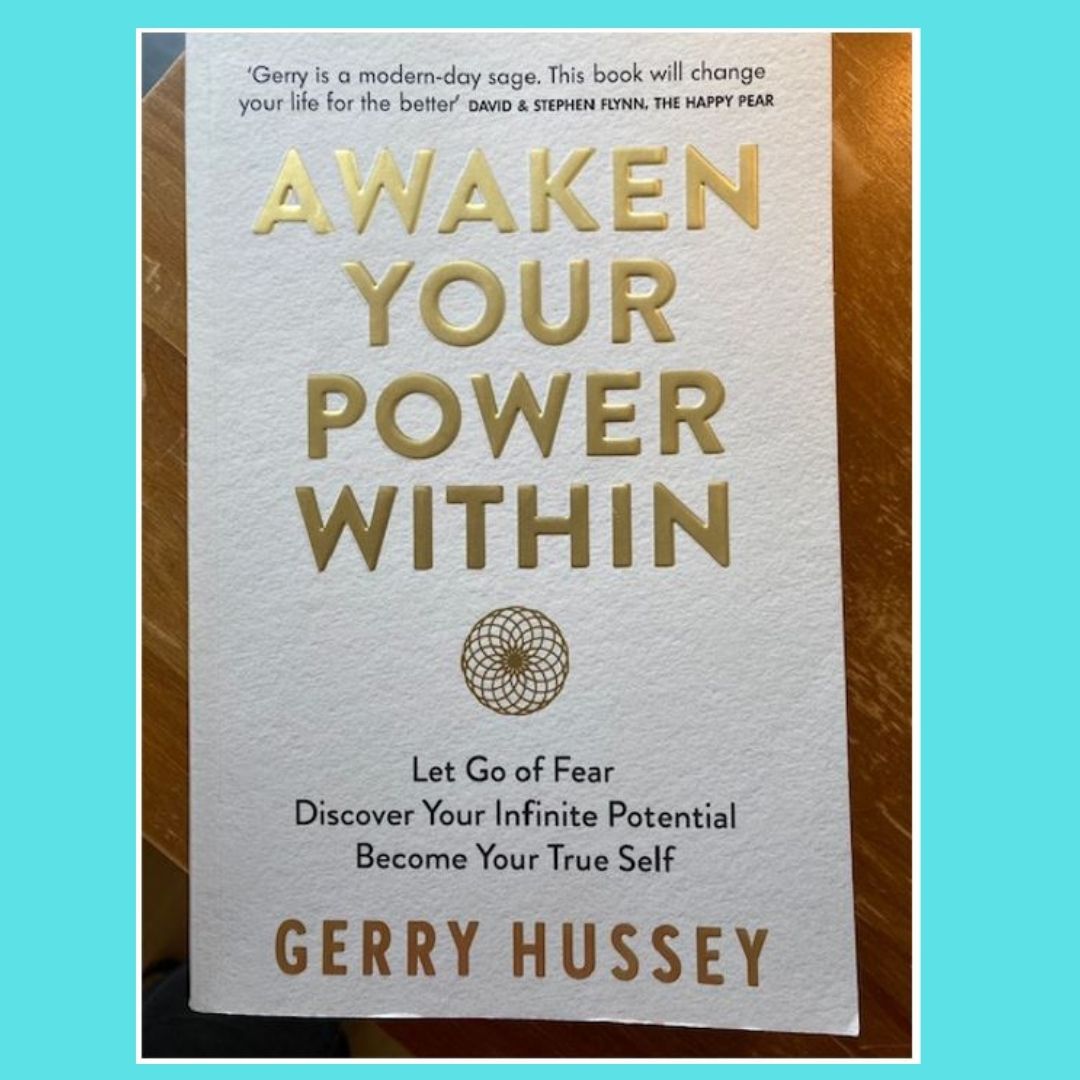
Gerry Hussey’s “Awaken Your Power Within” covers many elements. Gerry introduces us to aspects of science, elements about our own beliefs, exercises to encourage self-reflection and meditation, advice to help us find our potential as well as Gerry’s own personal story.
It has taken me 3 months to read this book. I have never met Gerry but if he was open to a suggestion from me, it is that I think structuring the book as a 3 month course similar to, for example, “The Artist’s Way” by Julia Cameron might make it even more accessible and perhaps more actionable. Maybe that suggestion is also to help me feel better about taking so long to read the book!
Overall, this is an excellent book packed with insight and advice, that’s why I had to progress slowly!
A key message that I took from the book was, whilst being connected via external relationships is essential as we are social beings, we must also be important to ourselves. If we don’t prioritise our link with our authentic selves, we lose sight of who we really are and constantly seek external approval to fit in and please others.
One of my favourite exercises that Gerry offers is about how to construct and sustain positive thoughts. He uses the analogy of crossing a 100m wide river using 10 pieces of timber, each 10m long.
He gives an example of someone who has an initial thought that they will start a business but relatively quickly this is followed up with doubt thoughts and so this person talks themselves out of their initial ambition. Gerry suggests trying to create a sequence of 10 thoughts all of which sustain the initial idea, so that plank by plank, we cross the river.
Sustaining 10 thoughts in a row is firing new beliefs in the brain and creating a pathway that cements our self-belief in our own ideas. It’s a way to help us beat the fear thoughts that will always pop-up. I liked this as its simple but I can see how it would be effective. It’s challenging to get to 10 thoughts in a row without succumbing to negative beliefs.
I enjoyed this book and I’m grateful to Gerry for sharing his personal story as well as his expertise as a performance psychologist and coach.
I’ll finish with 3 of my favourite quotes from the book.
“We can’t arrive at a new destination using the same old roads of the past.”
“Today is either one day or day one.”
“We only die once, we get to live every single day.”
I have been teaching two 4th year modules this semester. Part of the assignment for both included students making a short presentation in front of class-mates. Many of these fourth year students hadn’t done anything like this for 2 years and they were nervous.
However, they did it!
I was really pleased for them. There were different standards in the presentations and some felt they could have done better. I told them to focus on being proud of themselves for having had the courage to stand and deliver!
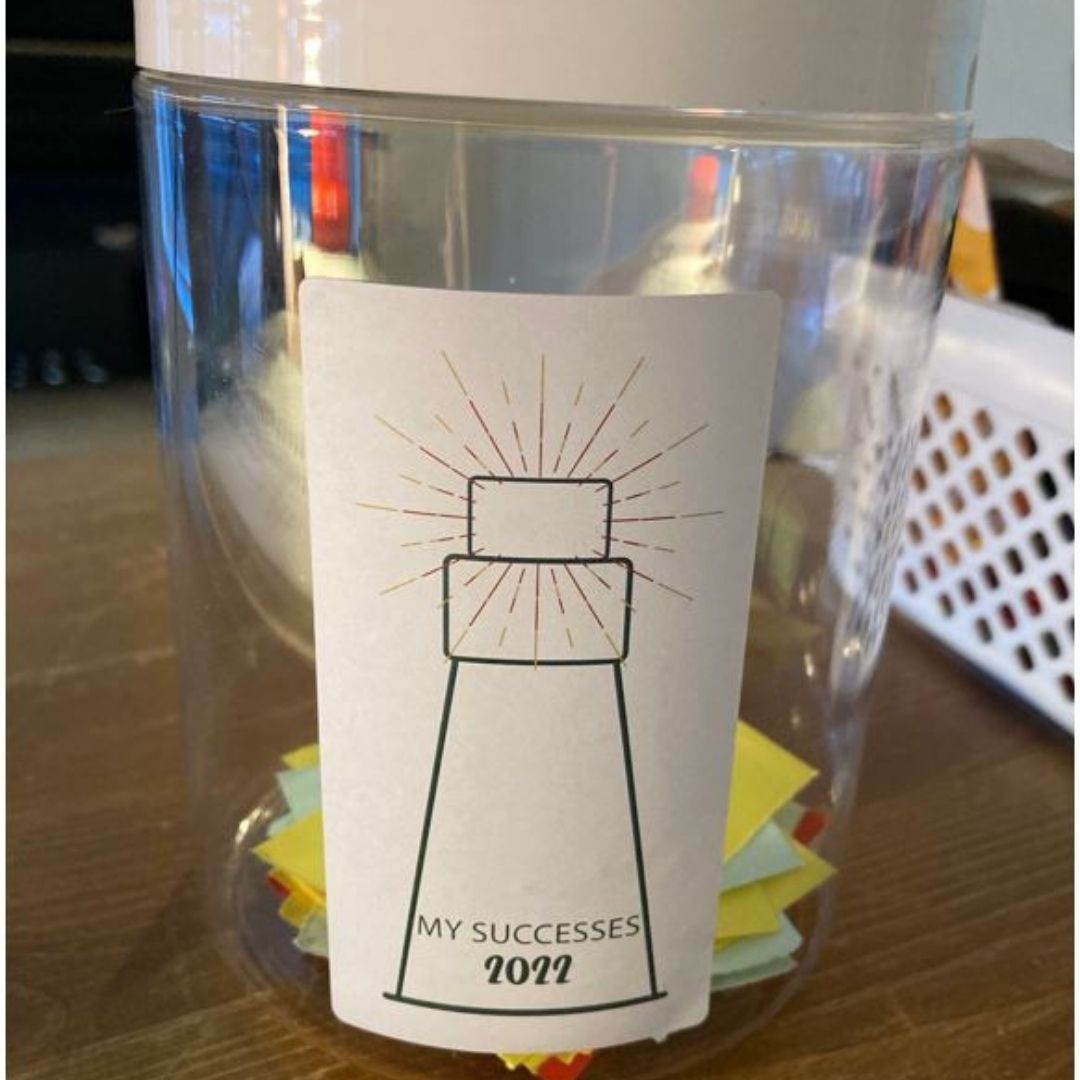
I suggested they create a success jar or open a success notebook to record their achievement. I started using a success jar in January this year. A number of years ago, I created an email folder for any compliments or praise I received by email. These are useful resources to have to read over in advance of an important meeting or before going to a job interview or even to provide a boost if your energy is low.
Writing this prompted me to review the notes I’ve added to my own success jar. Year to date, I have 24 successes spread across 99 days. This equates to a success almost every 4 days. Many are small things that I might easily have forgotten but I got a lift as I read over them.
Invest in a success jar, you’ll be happy with the return!
On this day, 3rd April 2022, those of us living in Ireland get the chance to complete our Census form. For the first time, we can include comments in a time capsule section which will be opened in 100 years.
Coincidentally, I have my own time capsule today. Twenty years ago, long before I had a website or even knew what a blog was, I had something I wanted to get off my chest.
I was working as a temp in Sydney, Australia and I was not impressed with the level of respect shown in the workplace. Luckily for me, the Sydney Morning Herald newspaper had a column called The Heckler, a place where one could apply their wit to anything that made their blood boil.
So with a sprinkling of humour, I got my chance to have my say on 3rd April 2002.
I hope you enjoy reading my publishing debut and I hope things have changed for temporary office workers!
From Sydney Morning Herald 3rd April 2002From Sydney Morning Herald 3rd April 2002
Feature Image Credit: Matthew Ball via unsplash.com







 Sinead Huskisson